Investing in whisky
If you are considering investing in whisky, you are in the right place. On this page we explain what investing in rare Scotch single malt whisky involves, why scarcity and maturation are at the core of value development, and what you can expect in terms of return, risk and time horizon.

Stijn de Smit · 1 June 2026 · 9 min read
- Whisky
- Investing
- Single malt
Scotch Whisky Investments has guided high-net-worth individuals in this segment since 2002, operating under regulatory oversight, with over EUR 350 million in assets under management and more than 1,600 clients.
The Knight Frank Luxury Investment Index shows that rare whisky bottles have risen by more than 111% over the past ten years. Our own portfolios, a combination of rare bottles and maturing casks, achieved an average of 10.6% per year over 2018-2025. The difference versus the broader market (WhiskyStats Scotland index: +104% over the same period, averaging 5.6% per year) comes down to focus: we select exclusively the most scarce segment.
Why invest in whisky?
Low correlation with financial markets
Whisky moves independently of equity and bond markets. Allocating approximately 10% of freely investable capital to rare whisky alongside a traditional 60/40 portfolio adds demonstrable diversification without reducing expected returns.
Structural scarcity that only increases
Of all Scotch whisky produced annually, 88% is blended Scotch. Of the remaining single malt, only 0.7% is old enough (at least 25 years) to fall into the category of investment-grade rare whisky. What has once been consumed or bottled cannot be reproduced.
Growing global demand
In 2025, Scotch whisky export value reached GBP 5.36 billion, equivalent to 43 bottles every second. Two recent trade agreements strengthen the growth outlook: India reduced its import tariff on Scotch from 150% to 40% over 10 years. China halved its tariff from 10% to 5% in early 2026, expected to add GBP 250 million in export value over five years.
Tangible, real ownership
Owning a cask or bottle means owning a physical asset with intrinsic value. Fundamentally different from equities, bonds or crypto.
Proven resilience
Over the past ten years (2015-2025): rare whisky +111.9% (KFLII), MSCI World +190%, gold +278%. Gold and equities perform strongly in absolute terms. The distinguishing characteristic of whisky is its low correlation: whisky moves independently of those markets and therefore adds genuine diversification to a portfolio.
Whisky or whiskey: what is the difference?
Anyone searching for investing in whisky or investing in whiskey is looking for the same thing. The difference lies solely in origin: Scottish and Japanese production uses the spelling without an 'e', whisky. American and Irish production writes whiskey, with an 'e'. We focus exclusively on Scotch single malt, so always: whisky.
How does the whisky market work? 3 indices you need to know
1. Knight Frank Luxury Investment Index (KFLII)
The most widely cited reference for luxury assets worldwide. The KFLII for rare whisky shows a rise of +111.9% over ten years (2015-2025). The index tracks the top cohort of the rarest bottles. Over 2025 the index showed a correction of -10.9% on an annual basis, a reminder that whisky is not a linear investment. The 10-year performance nonetheless holds up. Investors with a long-term horizon look through short-term fluctuations.
2. WhiskyStats
WhiskyStats is the central data source for the whisky market, where both primary and secondary transaction data come together. The platform offers indices at multiple levels: region (Speyside, Islay, Highlands, Campbeltown), country and per individual distillery. The broad Scotland index shows a rise of 104% from January 2013 to January 2026, averaging 5.6% per year. Anyone who wants to follow the whisky market seriously uses whiskystats.com.
The British whisky auction market grew from GBP 7.6 million in 2014 to over GBP 73 million in 2024, a tenfold increase in ten years, driven by growing international demand and increased accessibility of online auction platforms.
Is there a whisky ETF? Read the answer in the FAQ at the bottom of this page.
Investing in whisky casks or bottles?
Investing in whisky casks
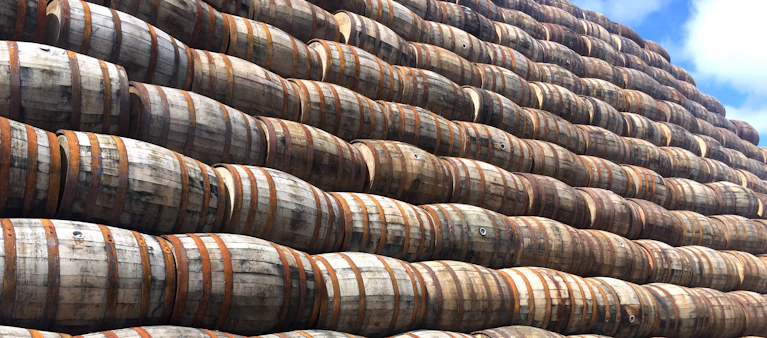
A cask is a living product. From the moment new spirit enters the oak, a biological maturation process begins that cannot be accelerated. Volume decreases through evaporation (averaging 2 to 3% per year, the so-called angel's share) while complexity and rarity increase. The longer a cask matures, the scarcer the contents.
Scotch Whisky Investments focuses exclusively on the most scarce segment: whisky that reaches the age at which it achieves rare, investment-grade quality, typically well above 25 years. This is the segment that only 0.7% of all single malt ever reaches. Maximum maturation time is not a side note for us, it is the core of our strategy.
Ownership of a cask is legally and economically recorded via a delivery order, registered with UK customs (HMRC). The cask remains in a duty-suspended bonded warehouse for as long as it is not bottled. Duties are only payable at the point of bottling and importation. Storage costs average a few hundred pounds per year and are presented transparently at the start.
We actively manage casks from our own warehouses in Glenrothes, Scotland — with room for more than 25,000 casks — via our digital cask management system Vapour. Each cask is measured annually, regularly tasted and fully documented.
Investing in whisky bottles
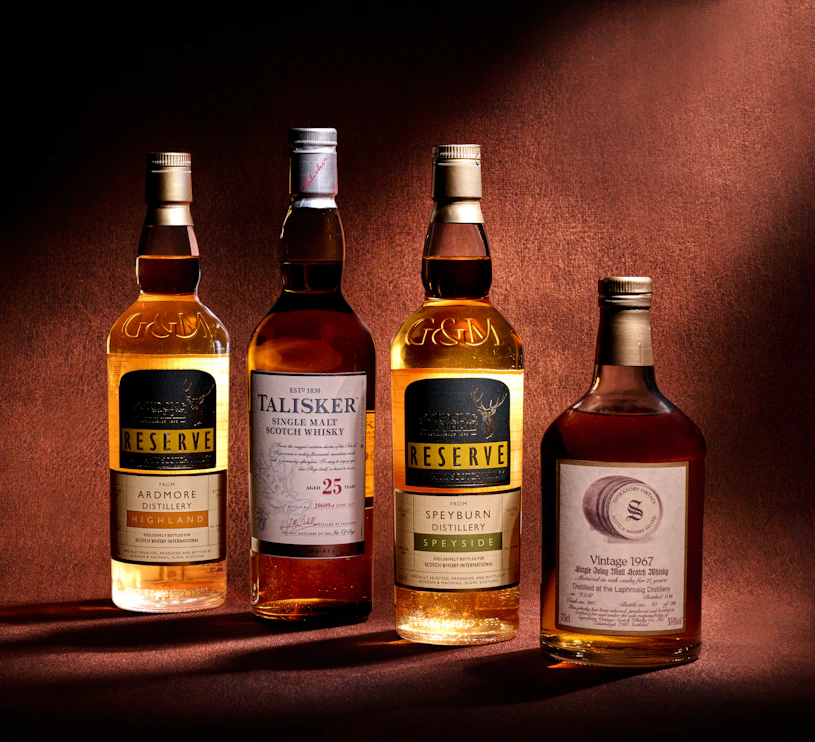
Rare bottles are a finished product. At the point of bottling, the character is set. Macallan 1926 achieved over EUR 2.4 million for a single bottle at Christie's, an extreme outlier, but illustrative of the power of brand perception and scarcity. The value of an investment-grade bottle is determined by brand, age at bottling, rarity and international auction demand.
Bottles generally offer more liquidity than casks: they can be offered at any time through auction houses, private sales or via THE SWEX, our specialist trading platform. Prices are transparently tracked via WhiskyStats and whiskybase.com.
Scotch Whisky Investments selects bottles based on years of market knowledge and an extensive network of distilleries, independent bottlers and auction houses. The focus is on rare Scotch single malts from premium brands such as Macallan, Springbank, Ardbeg and closed distilleries including Brora and Port Ellen.
For what type of investor is this suitable?
Investing in whisky with Scotch Whisky Investments is aimed at high-net-worth individuals with a serious investment horizon. The minimum investment is EUR 100,000. Within that portfolio we build a diversified combination of rare bottles and maturing casks, spread across regions, distilleries and ages.
Whisky fits as a strategic allocation of up to 10% of freely investable capital, as a buffer against volatility, as an alternative growth driver and as tangible value storage with low correlation to equities and bonds.
Do you have a smaller budget? Get in touch regardless. In some cases there are options through shared cask ownership or a phased approach. We are happy to discuss what is realistic in your situation.
Why Scotch Whisky Investments?
We are based in Sassenheim (the Netherlands) and Glenrothes (Scotland), with our own bonded warehouses with room for more than 25,000 casks, maturing under the direct supervision of our whisky analysts. Our activities are regulated by the Dutch Authority for the Financial Markets (AFM), which oversees our operations and client protection standards.
Founded in 2002, over 23 years of market experience
Over EUR 350 million in assets under management
More than 1,600 clients
Own bonded warehouses in Glenrothes, Scotland, no third party
Active cask management via our own system Vapour
Bi-annual reporting per portfolio with individual cask analyses
Current market developments
The whisky market is evolving rapidly. Read our recent analyses:
Knight Frank Wealth Report 2026: India and whisky as an investment
Geopolitical uncertainty and the effect on whisky investments
Past results do not guarantee future performance. Investing in whisky carries risks, including illiquidity and loss of capital. Scotch Whisky International B.V. is registered in the register of the Dutch Authority for the Financial Markets (AFM).
Frequently asked questions
What is the expected return on investing in whisky?
Based on historical data, the value development of rare whisky averages between 6% and 11% per year. The Knight Frank Luxury Investment Index showed a rise of +111.9% for rare whisky over ten years (2015-2025). The broader WhiskyStats Scotland index achieved +104% over the same period (averaging 5.6% per year). Our own portfolios, concentrated in the scarce 25+ segment with a mix of bottles and casks, achieved an average of 10.6% per year over 2018-2025. Past performance does not guarantee future results. Whisky is an illiquid, long-term investment in which losses are also possible.
Is there a whisky ETF or whisky index fund?
No, there is no listed whisky ETF or index fund that invests directly in physical whisky. Whisky is an alternative, non-listed investment category. You can track market movements via WhiskyStats, which brings together both primary and secondary market data in indices at region, country and distillery level. Direct exposure to the whisky market always goes through physical casks or bottles, preferably via a specialist, regulated manager.
How long do I need to hold my investment?
Whisky is a long-term investment with a horizon of at least five to ten years. For cask whisky investment: the longer the maturation, the greater the scarcity and the stronger the value development. Scotch Whisky Investments focuses on the segment above 25 years, precisely because that is where structural scarcity is greatest. Short-term liquidation carries a real risk of loss.
How do I track the value of my whisky investment?
The central source for price data and market indices is whiskystats.com, the platform that brings together both primary and secondary market data in indices at region, country and distillery level. Additionally, whiskybase.com provides detailed bottle prices. For Scotch Whisky Investments clients there are also bi-annual portfolio reports with individual cask analyses, plus access to pricing via our own platform THE SWEX.
What are the tax rules for whisky as an investment?
Tax treatment of whisky investments varies by country of residence and individual circumstances. In the Netherlands, whisky typically falls under box 3 (wealth tax). For UK and international investors, capital gains tax treatment may apply on disposal. As long as a cask is maturing in a Scottish bonded warehouse, no UK excise duty is payable. Duty only becomes applicable at the point of bottling and importation. Storage costs (averaging a few hundred pounds per year per cask) are a regular cost item. Currency fluctuations (EUR/GBP) can affect returns. Always consult a tax adviser for your specific situation.
Can I invest in whisky with a smaller budget?
The minimum investment at Scotch Whisky Investments is EUR 100,000. This is related to the quality and rarity of the casks and bottles we select, and the intensity of the guidance we provide. Do you have a smaller budget? Get in touch regardless. In some cases there are options through shared cask ownership or a phased approach. We are happy to discuss what is realistic in your situation.
Read more
Related articles
How might US and EU tariffs impact the Scotch whisky market?
De VS legt momenteel geen invoerrechten op Schotse single malt whisky op. Het vorige tarief werd voor een periode van 5 jaar opgeschort en loopt af in juni.
Read article
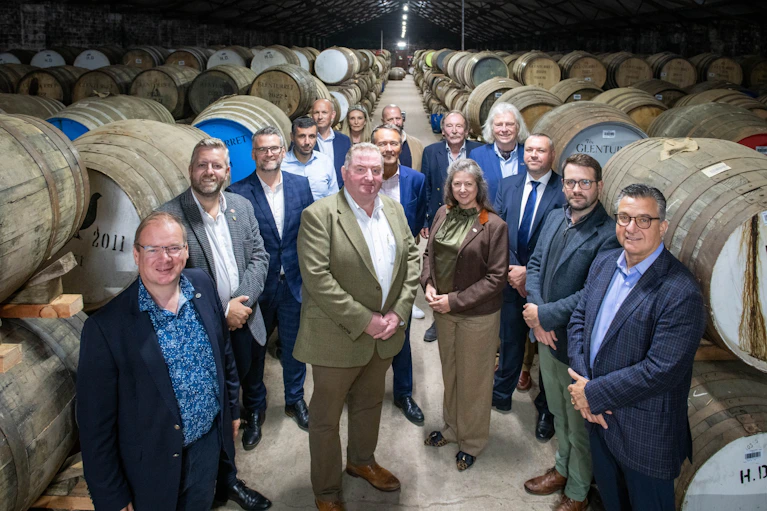
CWA launched to provide safe whisky investment environment
The Cask Whisky Association (CWA) establishes a safe environment and best practices for those looking to invest in a whisky cask. Learn more about the impact.
Read article

Wealth growth, India and whisky as an investment
What the Knight Frank Wealth Report 2026 and the UK-India trade agreement mean for investors in Scotch single malt whisky.
Read article
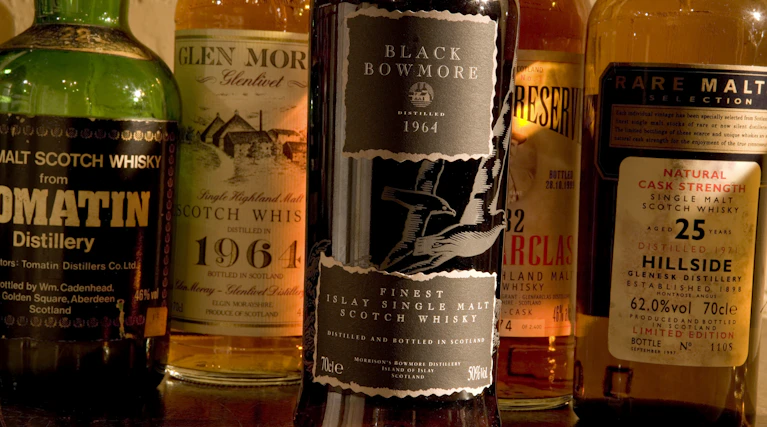
Investing in whisky bottles: rare bottles as a separate asset class
Investing in whisky bottles attracts a growing number of investors looking for diversification in a tangible, internationally tradable object. A bottle of whisky is a finished product: at the moment of bottling its character is fixed. The spirit does not mature any further and will look the same in ten or fifty years, provided it is stored correctly.
Read article
Ready to start investing in whisky?
Schedule a no-obligation call with one of our whisky experts.