

Wealth growth, India and whisky as an investment
What the Knight Frank Wealth Report 2026 and the UK-India trade agreement mean for investors in Scotch single malt whisky.

Stijn de Smit · 15 May 2026 · 8 min read
The Knight Frank Wealth Report 2026 was published in April and contains a number of figures that are relevant for investors in Scotch single malt whisky. The Knight Frank Luxury Investment Index shows that whisky bottles declined 10.9 percent in value over the past year. That decline is real, though the index Knight Frank uses for this measurement deserves more context, something we address further in this article. At the same time, the number of wealthy individuals worldwide continues to grow: every day, 89 people cross the threshold of 30 million dollars in net worth. These two developments together, a secondary market that is correcting, and a structurally growing group of wealthy buyers worldwide, paint a more nuanced picture of where the whisky market stands today than the KFLII decline alone suggests.
Wealth grows and shifts
The global UHNWI population grew between 2021 and 2026 from 551,435 to 713,626 individuals, an increase of over 160,000 wealthy individuals in five years. Knight Frank reintroduces in this report the concept of 'plutonomy': the economic model in which wealth structurally concentrates at the top of the wealth distribution. That concentration is not diminishing, it is deepening.
The group of people that emerges as a result behaves differently from traditional investors. The 2026 Family Office Survey, conducted by Knight Frank among more than 40 family offices worldwide, shows that wealthy families describe tangible, physical assets as a 'core passion', citing the asset-backed security that physical ownership provides. At the same time, the report identifies a clear shift in what wealthy consumers are looking for: no longer purely financial return, but also experience, community and meaning. The 'transformation economy', as Knight Frank calls it, centres on investments that deliver personal growth and a sense of belonging, experiences that extend beyond the ownership of an object.
Whisky casks connect both dimensions. They are a physical, tangible asset with demonstrable asset-backed security, and they offer the possibility of direct engagement with the investment, visiting casks in our warehouses in Glenrothes, tasting the maturing spirit, being part of a community of like-minded investors. Knight Frank's research indicates that this kind of tangible involvement is carrying increasing weight in the decision-making of high-net-worth individuals.
India: from the world's largest barrier to the world's largest opportunity
Nowhere is the backdrop of the Knight Frank report more relevant than in India. Between 2021 and 2026, India's UHNWI population, individuals with a net worth exceeding 30 million dollars, grew by 63 percent, from just over 12,000 to nearly 20,000 individuals. That is the strongest growth of any major economy in the world over that period. Knight Frank projects further growth to 25,217 individuals by 2031.
That wealth creation reflects a broader economic reality. India's GDP rose 38 percent in five years. Mumbai, described by Knight Frank as India's New York, faces a structural scarcity of land and a growing class of wealthy buyers seeking premium quality and exclusivity. The scarcity logic that drives the value of high-quality real estate in Mumbai applies equally to maturing whisky casks: no more can be produced than what is filled today.
India was until recently also the market with the world's highest tariff barrier for Scotch whisky: 150 percent import duty. Despite this, the industry exported more than 220 million bottles to the country in 2025, a growth of 15 percent on the previous year. That demand was driven by a cultural anchoring of Scotch whisky in India built over decades, rooted in British-Indian history, and reinforced by a cosmopolitan upper class with significant ties to London.
In spring 2025, UK Prime Minister Starmer and Indian Prime Minister Modi signed a free trade agreement that gradually reduces the import tariff on Scotch whisky from 150 percent to 40 percent over ten years. The Scotch Whisky Association called it a once-in-a-generation deal. The expected export growth resulting from this agreement is estimated at up to one billion pounds per year, for an industry with total annual export value of 5.3 billion pounds, the potential impact is substantial.
The KFLII: what declined, and what that means
The Knight Frank Luxury Investment Index (KFLII) shows a decline of 10.9 percent for whisky bottles over the past year. That decline is real. We see it reflected in broader market indices and in the bottle portfolios of our own investors. It also fits a broader pattern that characterises the entire luxury investment market: contemporary art fell 6 percent, fine wine lost up to 4.8 percent and classic cars declined 3.7 percent. Speculative capital is leaving the market, buyers are becoming more selective and prices are moving towards levels that better reflect underlying fundamentals.
What does deserve context is what the KFLII actually measures. The data source Knight Frank uses for whisky is the Rare Whisky 101 Icon 100 Index, an index of just 100 iconic collectible bottles. This is an extremely narrow selection. Knight Frank used the Rare Whisky Apex 1000 as its benchmark in previous years, an index that covered ten times as many bottles and therefore provided a considerably broader picture of the market. That index is no longer available. The WhiskyStats Scotland Index, which tracks the value development of the 500 most traded Scotch whiskies per month, showed a decline of 8 percent over the same period, still a decline, but considerably less than the 10.9 percent suggested by the Icon 100.
Over a ten-year period, whisky rose 111.9 percent in value, the strongest performance of all luxury asset classes in the entire KFLII index, above art, wine and watches. That long-term performance reflects the mechanism that distinguishes the category: a combination of growing demand and a supply that structurally shrinks as stocks are consumed and maturation periods elapse.
Bottles and casks: two different markets
The KFLII measures the secondary market for whisky bottles, bottles traded at auction. That market responds to liquidity, sentiment and speculation, in the same way as the market for contemporary art or luxury watches.
A maturing cask in a bonded warehouse in Scotland operates under different conditions. The cask is not priced daily, is not listed at auction and does not respond to this week's market movements. It matures. Every day the spirit extracts wood compounds from the oak cask, builds complexity and loses volume to the angel's share. Value development is determined by time, distillery and scarcity, factors that move independently of sentiment on the secondary market.
The decline shown by the KFLII therefore affects investors in whisky casks in a fundamentally different way than holders of bottles. Where the value of an iconic collectible bottle is directly visible in auction results, a cask simply keeps maturing, regardless of what is being sold at auction this month.
What this means for the investor
The market conditions that are currently converging are worth taking seriously. Noble & Co, a research firms in the whisky market, estimated in October 2025 that major distilleries have cut production by 30 to 50 percent relative to earlier levels. Less production today translates, over ten to fifteen years, into a narrower supply of finished product at the moment when demand will be considerably larger.
That demand is growing on multiple fronts simultaneously. In January 2026, China halved the import tariff on Scotch whisky from ten to five percent, worth an estimated 250 million pounds in additional export value over five years. In April 2026, the Trump administration abolished all tariffs on Scotch whisky, a direct improvement in sales conditions in the market that historically generates the highest export values. And the UK-India free trade agreement opens access to the world's largest whisky market by volume, at the moment when India's wealth class continues to grow in both size and purchasing power.
The scarcity of tomorrow is being created today. Production is shrinking, market access is improving and demand is growing structurally. Added to this, entry prices for both bottles and casks are currently more favourable than in recent years.
Conclusion
The Knight Frank Wealth Report 2026 describes a world in which wealth is spreading faster than ever, but also a world that has become more volatile and uncertain. In that context, wealthy investors seek assets that stand apart from the daily volatility of financial markets: tangible, scarce and with a value trajectory that follows its own logic.
The correction in the secondary bottle market is real and recognisable. The long-term performance of 111.9 percent over ten years reflects however a mechanism that is not affected by that correction: a combination of growing demand and shrinking supply. The UK-India trade agreement, the abolition of tariffs in the US and the reduction in China structurally reinforce that demand side, precisely at the moment when production is shrinking and the stock of maturing whisky is becoming smaller.
Investing in whisky is by definition a decision for the long term. The conditions that determine the value of a maturing cask at exit, scarcity, market access and demand, are all currently moving in the same direction. The cask simply keeps maturing, and every day it becomes a scarcer product.
Would you like to know what whisky as an investment could mean for you? As an asset manager specialising in Scotch single malt whisky, operating under an AFM licence, we offer tailored investment advice. Schedule a personal conversation with one of our advisers and discover how a portfolio of casks and rare bottles aligns with your investment objectives.
Sources: Knight Frank Wealth Report 2026; Noble & Co Whisky Intelligence Quarterly Report Q3 2025; Scotch Whisky Association; UK Government trade announcement; WhiskyStats.
Read more
Related articles
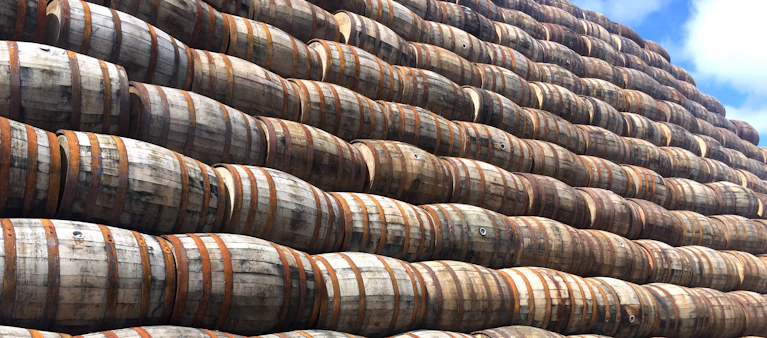
How might US and EU tariffs impact the Scotch whisky market?
De VS legt momenteel geen invoerrechten op Schotse single malt whisky op. Het vorige tarief werd voor een periode van 5 jaar opgeschort en loopt af in juni.
Read article
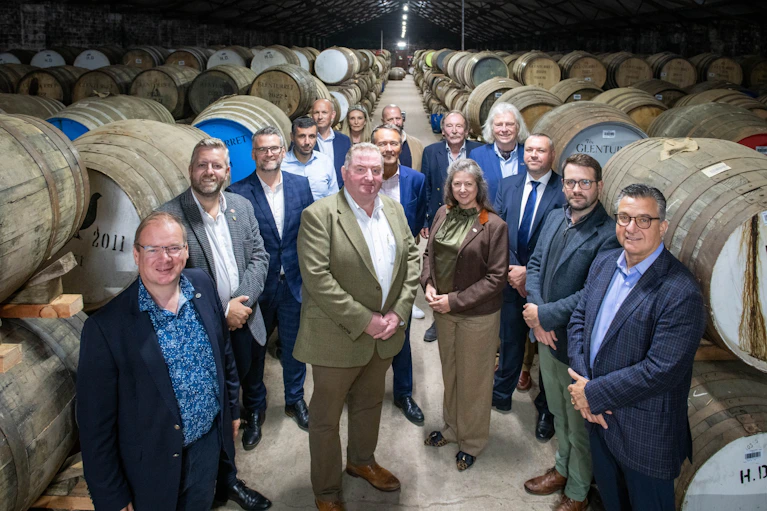
CWA launched to provide safe whisky investment environment
The Cask Whisky Association (CWA) establishes a safe environment and best practices for those looking to invest in a whisky cask. Learn more about the impact.
Read article
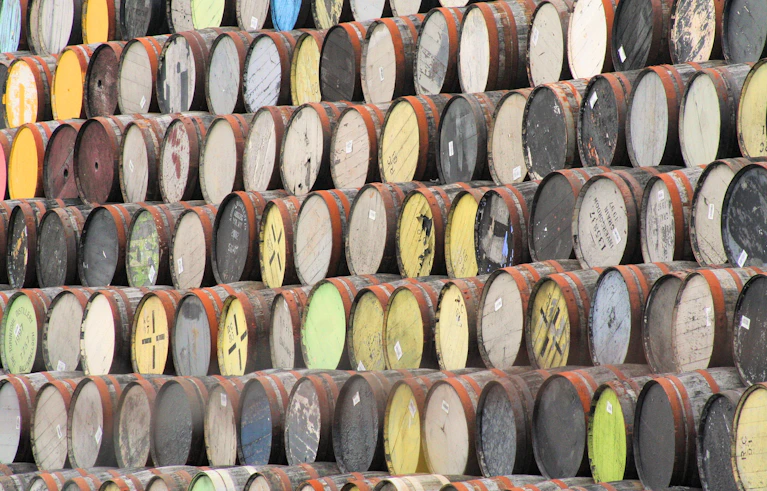
US tariffs on Scotch Whisky removed
President Trump has lifted all US tariffs on Scotch Whisky. What does this mean for the whisky market, rare bottles and investors in whisky casks?
Read article
Ready to start investing in whisky?
Schedule a no-obligation call with one of our whisky experts.