
What a tariff reduction in China means for Scotch whisky in the long term
What does a tariff reduction in China mean for Scotch whisky? A long-term analysis based on market cycles, scarcity and value creation.

Stijn de Smit · 30 January 2026 · 3 min read
Tariffs accelerate, they do not create value
From a historical perspective, one thing is clear: tariffs do not create value in whisky. At most, they influence the speed at which existing demand and inventories meet. The value of Scotch whisky is shaped by time, scarcity and discipline in production, not by policy measures.
Our own cyclical analysis of the Scotch whisky market shows that the current period (2023–2026) fits squarely within a predictable correction phase. Declining export figures, inventory reduction and production constraints at major distilleries are not signs of structural weakness, but necessary conditions for future scarcity.
The chart in context: tariffs and exports over time
The accompanying chart, which plots the export value of Scotch whisky to China against the applicable import tariff, illustrates how tariffs primarily affect the pace of the market. Historically, several distinct phases can be identified:
2004–2005: a sharp decline from approximately 19.2% to 10%, laying the foundation for market development;
2006–2017: a prolonged period of stability around 10%, during which China evolved from a niche market into a mature destination;
2018–2024: an exceptional ‘tariff valley’ at 5%, coinciding with strong export growth and an acceleration of the premium segment;
2025: a normalisation back to the historical MFN level of 10%, alongside a broader market correction;
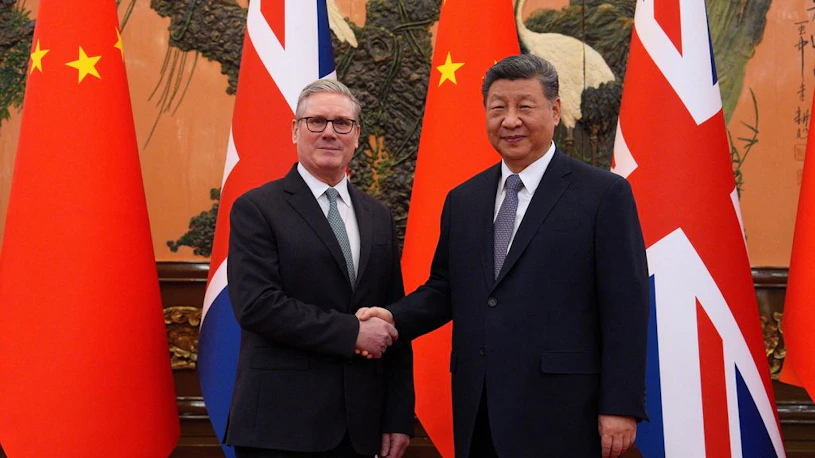
2026: a renewed reduction to 5%, as a result of recent bilateral agreements between the UK and China.
What the chart illustrates is not a causal relationship between tariffs and value creation, but a timing effect. Lower tariffs accelerate inventory absorption, while normalisation or ongoing negotiations influence purchasing timing and liquidity, including within the premium and rare segments. They do not, however, alter the structural demand for Scotch whisky.
China in historical perspective
China has by now become a mature market for Scotch whisky. In 2024, export value to China amounted to approximately £161 million, making it the tenth-largest export market globally for Scotch whisky. The sharp growth through 2022, followed by a correction in 2024, does not reflect declining interest, but rather a normalisation after exceptional years.
Even after this pullback, import levels remain structurally higher than before the pandemic. This underlines China’s role as a long-term market, with an increasing focus on premium and single malt whisky, a segment in which knowledge, provenance and maturation are central.
Against this backdrop, the tariff reduction can be viewed as an external catalyst. Historically, lower tariffs accelerate market uptake and particularly support the premium and single malt segments. At the same time, in the case of rare whisky, tariffs primarily affect pricing and timing, rather than underlying value, which is driven by scarcity, maturation and proven provenance.
The long term remains decisive
For whisky investors, this distinction is critical. Whisky that is not produced today cannot exist ten, twenty or thirty years from now. Production pauses and capacity discipline in the present create the supply gap of the future. That mechanism is irreversible, regardless of geopolitics.
A tariff reduction in China, if realised, could accelerate the existing cycle. It does not, however, confirm a new trend, nor does it replace time.
Conclusion
The discussions between London and Beijing are relevant, but primarily as confirmation of a broader reality: Scotch whisky remains a strategic export product with deep cultural and economic roots. For those who look beyond the headlines, this does not change the fundamentals of whisky investing.
Value is not created by policy, but by patience.
Would you like to explore the history of the whisky market and the dynamics of whisky as an investment in more depth? Our latest whitepaper provides further insight.
Source: Bron: gov.uk: Prime Minister secures Scotch whisky tariff cut in China worth £250 million.
Read more
Related articles
How might US and EU tariffs impact the Scotch whisky market?
De VS legt momenteel geen invoerrechten op Schotse single malt whisky op. Het vorige tarief werd voor een periode van 5 jaar opgeschort en loopt af in juni.
Read article

CWA launched to provide safe whisky investment environment
The Cask Whisky Association (CWA) establishes a safe environment and best practices for those looking to invest in a whisky cask. Learn more about the impact.
Read article

Wealth growth, India and whisky as an investment
What the Knight Frank Wealth Report 2026 and the UK-India trade agreement mean for investors in Scotch single malt whisky.
Read article
Ready to start investing in whisky?
Schedule a no-obligation call with one of our whisky experts.