
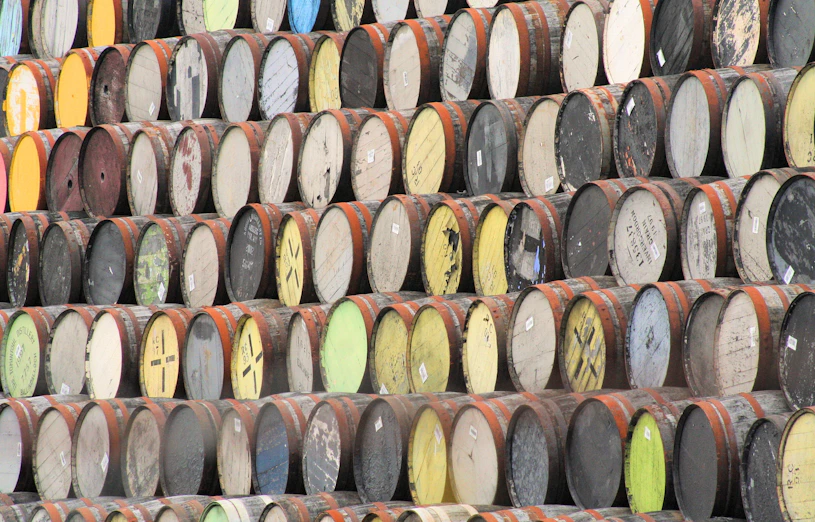
US tariffs on Scotch Whisky removed
President Trump has lifted all US tariffs on Scotch Whisky. What does this mean for the whisky market, rare bottles and investors in whisky casks?

Stijn de Smit · 1 May 2026 · 8 min read
On 30 April 2026, President Trump announced on Truth Social that all tariffs and restrictions on whisky imports from Scotland are being lifted. The occasion was the state visit of King Charles and Queen Camilla to Washington. It is a decision the Scotch industry has pursued for more than a year, and one with immediate consequences for its most valuable export market in the world. For investors in Scotch Single Malt, whether in casks or rare bottles, the question is the same: what changes now, and what does not?
A year of damage: the tariffs in numbers
To understand the significance of this removal, it is necessary to place the damage in perspective. In April 2025, the Trump administration imposed a ten percent tariff on all Scotch whisky imports. The consequences were immediate and measurable.
The Scotch Whisky Association (SWA) calculated that the industry was losing approximately four million pounds per week in export revenue. Between May and December 2025, export volume to the United States fell by fifteen percent. Over the course of the year, this cost the sector more than £150 million in lost exports to what has long been its most valuable market. Total exports to the US in 2025 reached £933 million, down four percent year-on-year, but the second-half figures were sharper: seven percent less in value, fifteen percent less in volume.
Beyond this, a further threat loomed. The suspension of the 25 percent tariff on single malt whisky, which during Trump’s first term caused over £600 million in cumulative losses, was due to expire in 2026, potentially giving way to a charge as high as 35 percent. That combination of a running base tariff and a threatened additional levy on the premium end of the market placed distilleries under pressure not seen in decades.
How the removal came about
President Trump’s announcement did not arrive without precedent. For months, both the UK and Scottish governments had been pressing the case at the highest levels. Prime Minister Starmer, First Minister Swinney, and the SWA lobbied the Trump administration persistently. Yet it was the Royal state visit that ultimately delivered the result.
Trump wrote on Truth Social: “The King and Queen got me to do something that nobody else was able to do, without hardly even asking.” Mark Kent, Chief Executive of the SWA, called it “a significant boost for the Scotch Whisky industry in our most valuable export market.” The removal applies to all whisky including Irish whiskey, and restores the tariff-free trading relationship that has long connected Scotland and Kentucky through the export of used bourbon barrels, a market worth approximately £200 million per year.
What this means for the export market
The direct effect is clear. Scotch whisky immediately becomes ten percent less expensive for American importers. For single malt in the premium segment, the threat of an additional 25 percent charge is also removed. This is not merely a cost advantage, it is a restoration of certainty. Importers and distributors in the US can once again plan, contract, and build inventory without accounting for an unknown tariff risk on the horizon.
The United States remains the most valuable export market for Scotch whisky. Even under tariff pressure, exports in 2025 reached £933 million. Historically, the total export value of Scotch grew from £2.24 billion in 2004 to £5.3 billion in 2025. The US has been a consistent driver of that growth. Tariff-free access to that market, combined with structural growth in India and the opening of China, gives the sector a considerably more favourable outlook than it had twelve months ago.
Rare bottles: a direct effect
Where casks build value through a maturation process that is insulated from trade policy, rare and collectible bottles operate under a different dynamic. Bottles traded on the international market, and particularly those destined for the United States, are directly impacted by import tariffs. A premium bottle entering the American distribution network became immediately more expensive for the end buyer under the ten percent tariff, resulting in softer demand, more cautious purchasing, and a market that temporarily offered less room for exit at the top end of the price spectrum.
That pressure is now removed. For rare bottles from limited bottlings, distillery exclusives, and aged premium releases, tariff-free access to the US represents a direct improvement in trading conditions in the market that historically generates the highest auction prices. The American premium whisky market is one of the deepest and most liquid in the world. When that market is accessible without a tariff barrier, it feeds through into demand for rare Scotch at global auctions and into the willingness of collectors to buy.
Casks: maturation unaffected, exit conditions improved
For investors in maturing casks, the distinction between two phases of the investment cycle is relevant: the maturation phase, and the moment of bottling and sale.
During maturation, trade policy has no bearing on the cask. A cask of Scotch Single Malt sits in a bonded warehouse. It matures. Each day, the spirit extracts wood compounds from the oak, builds complexity, and loses volume to the angel’s share. That process was not affected by the imposition of tariffs in April 2025, and it is not affected by their removal in April 2026. Scarcity increases, quality develops, and time works in the investor’s favour. These mechanisms function regardless of the state of trade policy.
The relevance of tariffs shifts to the point at which a cask is bottled and its contents reach the market. At that moment, at exit, the prevailing trading conditions partly determine what an investor realises. A whisky bottled for the US market and entering an environment without an import tariff has structurally better selling prospects than the same whisky facing a ten or twenty-five percent barrier. Tariff-free access to the US expands the pool of potential buyers, increases the willingness of distributors to pay premium prices, and thereby strengthens the value that can be realised at exit.
Three markets, one direction: the structural picture
The removal of US tariffs is the most recent positive signal in a series of structural trade developments that are strengthening the backdrop for whisky as an investment. What stands out is the convergence: three of the largest whisky markets in the world are moving simultaneously in the same direction.
In early 2025, Prime Ministers Starmer and Modi signed a free trade agreement that will reduce India’s import tariff on Scotch whisky from 150 to 40 percent over ten years. India is now the largest export market by volume, with 220 million bottles in 2025 and fifteen percent year-on-year growth, achieved despite the still-substantial tariff barrier at the time. With the FTA due to be ratified later in 2026, the market opens structurally. Projected export growth is estimated at up to £1 billion per year.
In January 2026, Prime Minister Starmer reached an agreement with China that halved the Chinese import tariff on Scotch from ten to five percent, worth an estimated £250 million in additional export value over five years. And now, in April 2026, the tariff to the US falls away entirely.
The US, India, and China together represent the three largest and most dynamic addressable markets for premium Scotch. The fact that all three are simultaneously lowering barriers is not a coincidence of timing, but the outcome of years of diplomatic and commercial effort. For an investor considering the long-term outlook for Scotch Single Malt, this converging picture offers a structurally more favourable backdrop than at any point in recent years. The conditions for value realisation at exit are improving across multiple continents at once.
Conclusion
The removal of US tariffs on Scotch Whisky is a concrete and positive turning point. The damage was real: more than £150 million in lost exports, a fifteen percent volume decline in the US market, and months of uncertainty for producers and traders. That pressure has now been removed.
For rare bottles, the effect is immediate: the largest and most valuable premium market in the world is once again fully accessible without a tariff barrier. For maturing casks, the maturation process was never interrupted, but the conditions under which those casks will eventually be bottled and sold have improved materially.
Investing in whisky is by definition a long-term decision. The backdrop for that decision is today considerably more favourable than at any point in recent years: tariff-free access to the US, expanding access to India and China, and a structural global demand for premium Scotch that does not disappear when trade policy moves in the wrong direction. For those considering entry into a physical, increasingly scarce asset class with low correlation to traditional markets, the current environment presents conditions that are, on multiple dimensions, aligned in the same direction. The cask keeps maturing. And every day it becomes a scarcer product.
Would you like to know what whisky as an investment could mean for you?
As an asset manager specialising in Scotch Single Malt whisky, operating under an AFM licence, we provide tailored investment advice guided by certified advisors. Schedule a personal conversation with one of our advisors and discover how a portfolio of casks and rare bottles fits your investment objectives.
Read more
Related articles
How might US and EU tariffs impact the Scotch whisky market?
De VS legt momenteel geen invoerrechten op Schotse single malt whisky op. Het vorige tarief werd voor een periode van 5 jaar opgeschort en loopt af in juni.
Read article
CWA launched to provide safe whisky investment environment
The Cask Whisky Association (CWA) establishes a safe environment and best practices for those looking to invest in a whisky cask. Learn more about the impact.
Read article

Wealth growth, India and whisky as an investment
What the Knight Frank Wealth Report 2026 and the UK-India trade agreement mean for investors in Scotch single malt whisky.
Read article
Ready to start investing in whisky?
Schedule a no-obligation call with one of our whisky experts.