Geopolitical uncertainty
What does geopolitical uncertainty mean for whisky as an investment? An analytical view of the whisky market, trade tariffs and why casks simply keep maturing.

Stijn de Smit · 9 April 2026 · 9 min read
The world is more unsettled than it was a month ago. The conflict between the United States and Iran is escalating, oil prices are reacting sharply and investors are reassessing positions across a broad front, from equities to commodities. In periods like this, the question every serious asset manager asks is the same: which parts of my portfolio behave predictably, and which do not?
For those invested in Scotch Single Malt whisky, that question is worth answering honestly.
How the whisky market builds value
The primary driver of value in the whisky market is structural, not cyclical. Scotch Single Malt must by law mature in oak casks for a minimum of three years before it can carry the name. Premium whisky matures for ten, fifteen, sometimes thirty years. The producer of a 25-year-old whisky in 2026 made his decisions in 2001, under entirely different market conditions, with entirely different information.
This creates an interesting economic mechanism. Unlike most products, supply cannot adjust to demand. If demand for 18-year-old Speyside rises, no distillery can solve that today. The whisky that will be sold as an 18-year-old in 2044 must be filled into cask today. That structural supply deficit, combined with growing global demand from India and Asia in particular, is why well-selected, well-matured whisky builds value on a time horizon that has little to do with the news cycle.
Academic research supports this. A study based on more than 60,000 individual auction transactions (Cordiez, Erasmus University, 2020) shows that the correlation between collectible whisky and traditional assets, equities, bonds, real estate, commodities, is consistently low. The value development of rare whisky follows its own logic.
The casks keep maturing
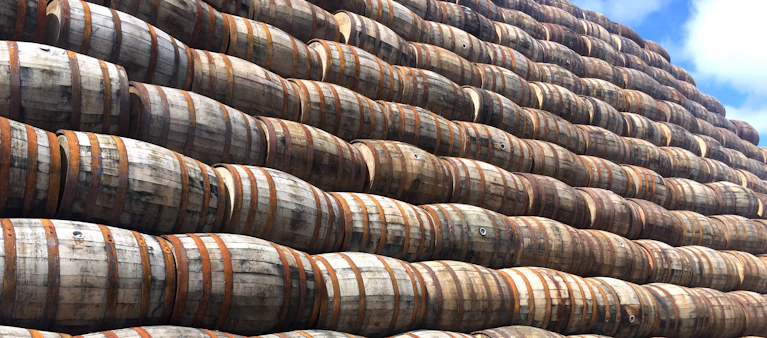
A cask of Scotch Single Malt lies in a bonded warehouse. In our case, in Glenrothes, Fife. It matures. Every day the spirit extracts wood compounds from the oak cask, builds complexity and loses volume to the angel's share, the evaporation legally estimated at approximately three per cent per year. That process is not influenced by the oil price or a central bank decision.
The value development of a well-selected cask is determined by time, distillery, cask quality and scarcity. A whisky that matures for thirty years becomes scarcer because less of it exists as time passes. That scarcity does not disappear when geopolitical tensions rise. The cask is still there. It is simply maturing.
Whisky and inflation
One macroeconomic phenomenon does deserve attention in the context of whisky as an investment: inflation. And here the mechanism works in the investor's favour. Whisky is a physical, scarce asset with intrinsic production costs, grain, distillation, casks, storage, time. When general price levels rise, so do the production costs of new whisky. That makes existing, maturing stock proportionally more valuable.
Historically, premium Scotch has structurally outpaced inflation. Not as a risk-free investment, but as an asset class whose value is derived from something that cannot simply be printed or scaled up.
Whisky as a diversification instrument
That whisky moves independently of financial markets is not only intuitively logical, it has been empirically demonstrated.
The Erasmus study (Cordiez, 2020) examined the correlation between collectible whisky and a broad range of asset classes over a period of nine years. The outcome was consistent: the correlation between whisky and global equities, bonds, real estate and commodities fell in almost all cases between -0.10 and 0.05. In practice, this means that whisky does not move in tandem when equity markets fall, nor when bond markets come under pressure. The return on whisky is determined by different factors than those that move traditional markets.
This has direct implications for the allocation within a portfolio. When an investor combines assets that are lowly correlated with one another, the total risk of the portfolio decreases without sacrificing return, the principle underlying modern portfolio theory. Cordiez constructed an optimised portfolio on the basis of his findings in which whisky received an allocation of seven to twenty-one per cent. That is on the high side, and it is an outcome specific to the research period. We take the position that an allocation of no more than ten per cent of investable assets in whisky is prudent and responsible, in line with the AFM framework, which explicitly positions alternative investments as a complement to a diversified portfolio, not its core.
A study published in the Journal of Alternative Investments (Tegtmeier, 2022) confirmed the diversification argument from a different angle. The research found that rare whisky recorded the highest average monthly return of all asset classes included over the period studied. That finding requires nuance: the research period coincided with a phase in which the whisky market performed exceptionally strongly and prices rose sharply. The returns from that period are no guarantee of the future, and it would be imprudent to present them as a benchmark. What does hold regardless of the market phase is the other finding from the same study: the correlation with traditional assets remained low, even during periods of market stress. That is the characteristic that is structurally relevant for an investor seeking to diversify their portfolio.
What these studies together show is that whisky is not only an asset class that builds value, but one that does so in a different way than the rest of a portfolio. In a period of market volatility, that is precisely the characteristic serious investors look for, not because whisky is without risk, but because the risks are of a different nature. A cask lying and maturing in Glenrothes does not react to an interest rate decision. It simply lies there. And every day it becomes a scarcer product.
Trade, tariffs and what this means for the market
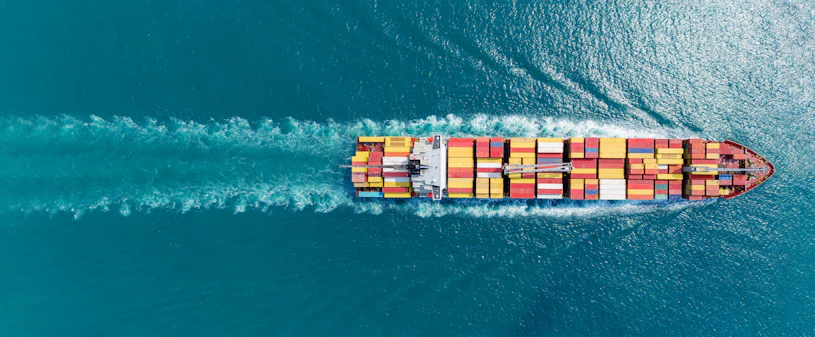
There is one area where geopolitical developments do directly affect the whisky market: international trade. The SWA published export figures for 2025 at the start of 2026, and they present a nuanced picture.
Total Scotch whisky export value fell slightly to £5.3 billion, a decline of 1.8 per cent on 2024. The United States, long the largest export market, showed the sharpest contraction. Following the introduction of a ten per cent American tariff in April 2025, export volume to the US fell by fifteen per cent between May and December. With a potential tariff increase to 35 per cent later in 2026, that pressure remains real.
At the same time, there are structural developments pointing in the opposite direction, and of a different order of magnitude.
India is now the largest market by volume, with growth of fifteen per cent in 2025, and that while a 150 per cent import tariff on Scotch whisky was still in place. That growth is not coincidental. The historical ties between the United Kingdom and India, rooted in decades of cultural and economic intertwining, have embedded Scotch whisky deeply in Indian premium culture. The wealthiest Indians partly reside in London, and that class of affluent, cosmopolitan consumers is growing rapidly. For them, Scotch is not a foreign product, it is a status symbol with a familiar history.
The UK-India free trade agreement, signed by Prime Ministers Starmer and Modi in spring 2025, builds on those foundations. The tariff will be gradually reduced to 40 per cent over ten years. The expected export growth to India as a result of this agreement is estimated at up to £1 billion per year, with a structural contribution of £190 million to the Scottish economy annually. For an industry with total export value of £5.3 billion, that is not a marginal shift. The SWA did not describe it as a once-in-a-generation deal without reason, it opens access to the world's largest whisky market at the moment the Indian middle class continues to grow in size and purchasing power. View press release.
China added to the positive news in January 2026: Prime Minister Starmer reached an agreement during his visit to Beijing whereby the Chinese import tariff on Scotch whisky was halved from ten to five per cent. That is worth an estimated £250 million in additional export value over five years. More modest than the India agreement, but a further confirmation that the two largest growth economies in Asia are opening their doors wider to Scotch. View press release.
For the investor in whisky at cask level, the relevance of annual export figures is indirect. The value development of a cask lying and maturing is not determined by the export performance of the current year, but by the quality of the cask, the reputation of the distillery and the scarcity at exit, ten or fifteen years later.
Over the longer term, however, export trends are meaningful, as they reflect the structural growth of global demand for Scotch. That growth is impressive: export value rose from £2.24 billion in 2004 to £3.95 billion in 2014 and £5.36 billion in 2025, with a peak of £6.2 billion in between. A market that more than doubles in value over two decades, and that now simultaneously gains new access to both India and China, provides a structurally favourable backdrop for investments in the product that serves that market. US trade tariffs are a real short-term risk, but they do not change the underlying demand dynamic driving this growth curve.
Conclusion
The whisky market does not respond to geopolitical uncertainty through the mechanisms that move traditional asset classes. Value development in Scotch Single Malt is determined by time, scarcity and craftsmanship, factors operating on their own time horizon, one that stands apart from this week's volatility. US trade tariffs represent a real risk for the broader sector and deserve close attention. But the structural demand for premium Scotch, driven by new trade agreements with India and China, and by a growing global middle class, remains intact.
Investing in whisky is by definition a long-term decision. It brings together three objectives that are becoming increasingly relevant for affluent investors: preserving wealth, introducing diversification into a portfolio, and not being led by the volatility of the day. Those who invest from these three principles seek assets that are insulated from daily market movements, and that is precisely the characteristic that structurally defines whisky as an asset class.
In periods of uncertainty in particular, diversification is not a secondary consideration, it is the starting point of responsible asset management. Whisky moves independently of the markets currently under pressure. That does not make it a safe haven, but it does make it a meaningful addition to a diversified portfolio, provided the time horizon is right and the selection is sound.
As an asset manager specialising in Scotch Single Malt whisky, operating under a licence from the AFM, we provide tailored investment advice, guided by certified advisers. Would you like to understand what whisky could mean for you, how a portfolio is structured and what active cask management means in practice? Download our whitepaper or schedule a conversation with one of our advisers.
Read more
Related articles
How might US and EU tariffs impact the Scotch whisky market?
De VS legt momenteel geen invoerrechten op Schotse single malt whisky op. Het vorige tarief werd voor een periode van 5 jaar opgeschort en loopt af in juni.
Read article
CWA launched to provide safe whisky investment environment
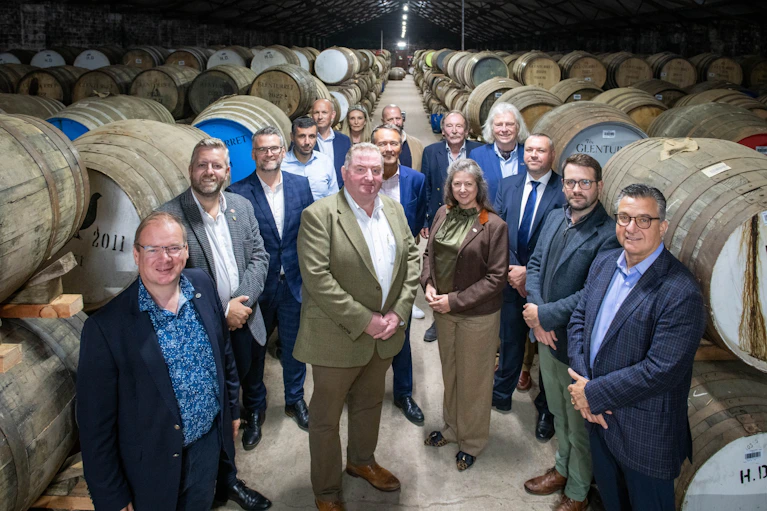
The Cask Whisky Association (CWA) establishes a safe environment and best practices for those looking to invest in a whisky cask. Learn more about the impact.
Read article

Wealth growth, India and whisky as an investment
What the Knight Frank Wealth Report 2026 and the UK-India trade agreement mean for investors in Scotch single malt whisky.
Read article
Ready to start investing in whisky?
Schedule a no-obligation call with one of our whisky experts.