
Whisky Monthly Update August 2026: where the surplus sits, and where it doesn’t
The auction market had its quietest month of the year in August, with the highest share of unsold bottles this decade. What did sell went for rising prices. This week, the Financial Times published an in-depth analysis of Scotland's whisky oversupply. Both pictures are accurate, and they concern different parts of the market.

Stijn de Smit · 9 September 2026 · 6 min read
- Investing
- Single malt
- Whisky
Market picture, August 2026
August is traditionally the quietest month on the secondary whisky market. At Whiskystats-tracked auctions, 20,480 bottles of 10,890 different whiskies were offered, the lowest number since August 2025 but 8.5% more than the same month a year earlier.
The Whiskystats Whisky Index, which tracks the 500 most-traded whiskies historically, closed August at 216.71 points: up 1.14% over the month, 3.12% for 2026, and 3.19% below the 223.85 points of August 2025.
As we focus exclusively on Scotch single malt whisky, we look specifically at the Scotland index. It stood at 210.52 points at the end of August against 205.10 in July, a rise of 2.64% over the month and 2.98% for 2026. Year-on-year the index sits 1.09% below August 2025.
After three years of correction, the market has moved into a phase of base-building. We covered that shift in depth in our H1 2026 half-year update.
One note on the figures below: the Whiskystats indices track only the bottle auction market. Casks are not traded there and so fall outside these figures.
Wondering how investing in Scotch single malt works in practice? Our whitepaper sets out how a portfolio is structured, the role of maturation, and the risks involved. Request the whitepaper.
Brora is the strongest gainer, Port Ellen leads the ranking
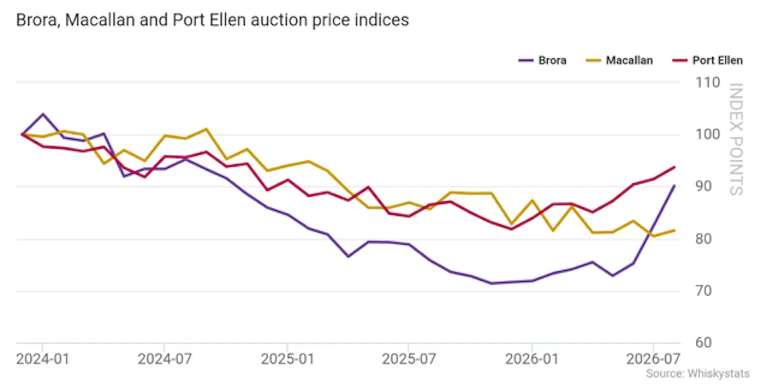
Brora was the best-performing brand of the entire summer season. After a dip in May, the Brora index gained 3.2% in June, 9.6% in July and another 9.3% in the August auctions, putting the brand at 25.8% for 2026. In the previous monthly update we called the July jump exceptional; August provides a first confirmation. Macallan gained 1.4%, but loses second place to Brora.
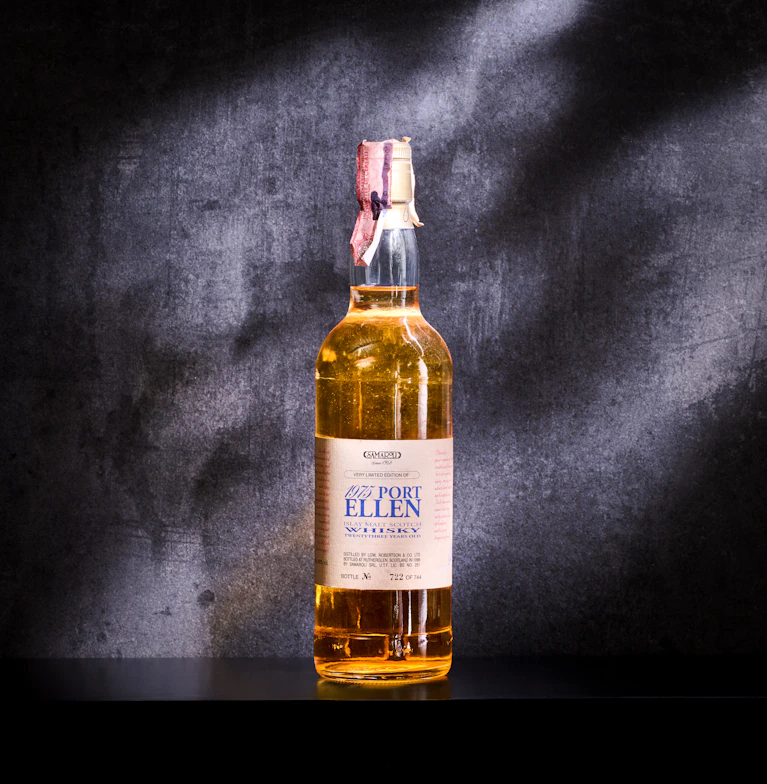
Port Ellen continues to lead the brand ranking unchanged, with 287.96 points at the end of August against 257.92 at the start of January, a rise of 11.7%. That Brora shows a higher return this year while Port Ellen sits at the top is not a contradiction: the ranking is based on the absolute index level, which reflects value development over several years, not this calendar year's return.
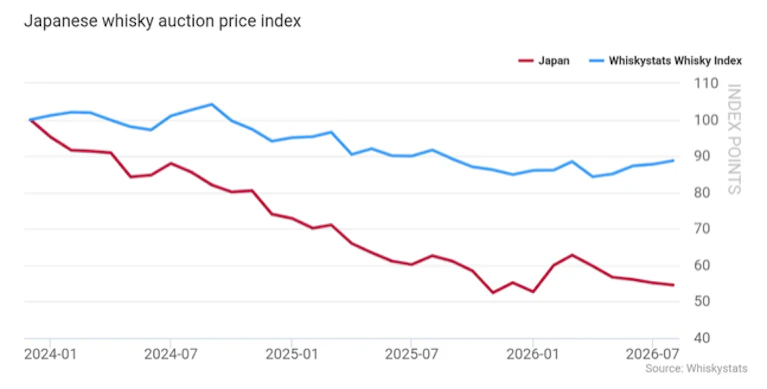
Japanese whisky was the only major index in the red, down 1.1%. While the broad Whisky Index recovered 5.2% since the April dip, Japanese whisky gave back a further 8.8% over the same period.
The highest share of unsold bottles this decade
August's most notable figure is not in the indices. Of the bottles on offer, 10.6% remained unsold, the highest share Whiskystats has recorded this decade.
The combination with the index levels is informative. What did sell went for prices above the previous month's level in almost every category. This is therefore not a price decline but a market buying more selectively. Supply that does not meet demand, whether on name, quality or asking price, goes unsold. That is a market that discriminates between what is scarce and what isn't.
The whisky loch: where the surplus sits
On 5 September, the Financial Times published an in-depth analysis of the Scotch whisky industry. The figures in it frame the market for years to come.
According to Martin Purvis and Duncan McFadzean's Commercial Spirits Intelligence newsletter, the volume of maturing whisky has grown from less than 400 million litres a decade ago to around 1.4 billion litres this year, enough to cover three years of current consumption. Many Scottish distilleries have cut production by more than a third as a result.
The financial pressure is concentrated among smaller, independent producers. According to McFadzean, also chairman of investment bank Noble & Co, as much as a quarter of Scotland's roughly 160 distilleries could be up for sale. Banks are reluctant with financing, and foreign investors are circling for distressed assets.
The major producers have the balance sheet to ride out the cycle. Diageo, which produces around a third of all Scotch whisky, holds $8.5 billion worth of ageing inventory. The FT likens their role to that of a central bank: they control how much whisky is in or out of the market at any given time, much as a central bank manages the money supply.
Where the surplus is not
This is the distinction that matters for the whisky investor.
Around 22 million casks are currently maturing in Scotland. That figure suggests abundance, but the vast majority of it was never destined for the market we are active in. Around 88% goes into blended whisky and is bottled between three and twelve years: the volume backbone of the industry, priced to move with consumer spending power. About 12% is bottled as single malt. The segment we focus on is a fraction within that: an estimated 0.7% of total stock is single malt maturing for twenty-five years or longer.
The timeline makes it concrete. A cask bottled today as a 30-year-old was filled around 1996; a 40-year-old dates from around 1986. The overproduction the Financial Times writes about concerns filling from the 2010s and later. That stock only becomes eligible for 30-year-old bottlings from the 2040s onward, and then only for the portion left untouched that entire time. For spirit destined for blends, that almost never happens. What makes a cask old whisky is not the year it was filled, but the decision not to touch it for decades.
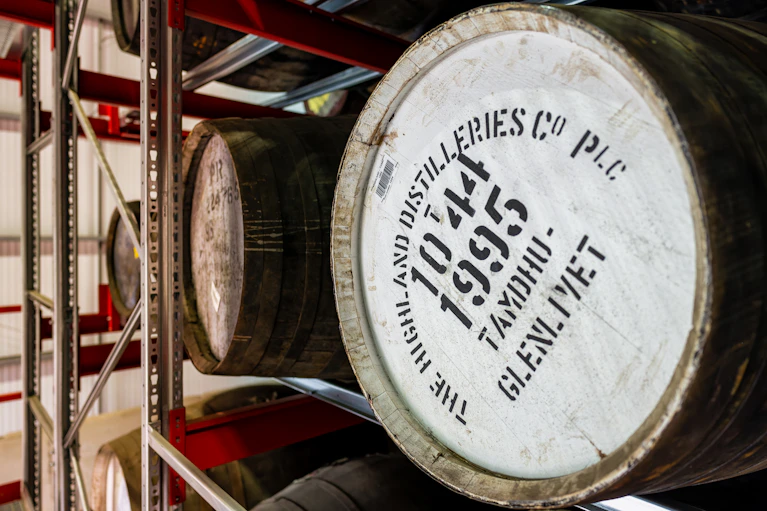
In the segment of twenty-five years and older, the opposite tends to apply: available stock declines every year, through bottlings, consumption and the evaporation loss every cask undergoes. What is not filled today cannot be a 30-year-old whisky in 2056. Today's reduced production therefore lays the groundwork for scarcity in the decades that follow. That mechanism is historically documented, though the timing and scale of the effect cannot be calculated in advance.
Why the way we build our portfolios matters here
A Scotch Whisky Investments portfolio consists, broadly, of twenty percent exclusive, rare bottles and eighty percent maturing casks, of which part is held beyond thirty years and part beyond forty. A cask is selected for the age it must ultimately reach, not the age it has now.
Within that, we combine a range of vintages: casks nearing bottling age alongside casks filled recently. That way, a portfolio spans the entire journey from young to old rather than only its final leg. How value develops within that journey varies by cask and by period and cannot be determined in advance.
The younger casks come from the same production stream in which the industry now sees a surplus. The difference is not in where the spirit comes from but in what it is destined for. Where most of that stream is bottled as young whisky or blend within a few years, these casks remain in place for three to four decades. What the industry experiences today as abundance is, in that light, the early stage of a position that only reaches bottling in the second half of this century.
These are casks from active Scottish distilleries across a range of regions, stored and managed in our own warehouses in Scotland. In selecting them, we look for names with a proven reputation and documented value development over longer periods. That selection is explicitly not limited to closed distilleries; those form part of the whole, not the starting point.
For the bottle portion, the same principle applies in a stronger form. Our own stock includes bottles from the 1960s, 1970s and 1980s, alongside a core of ultra-old bottlings from before 1960. Dozens of now-closed distilleries are represented within it, including Port Ellen and St Magdalene, alongside bottlings from the classic periods of Glenfarclas, Caol Ila, Glen Grant, Macallan, Bowmore, Springbank, Highland Park and Ardbeg.
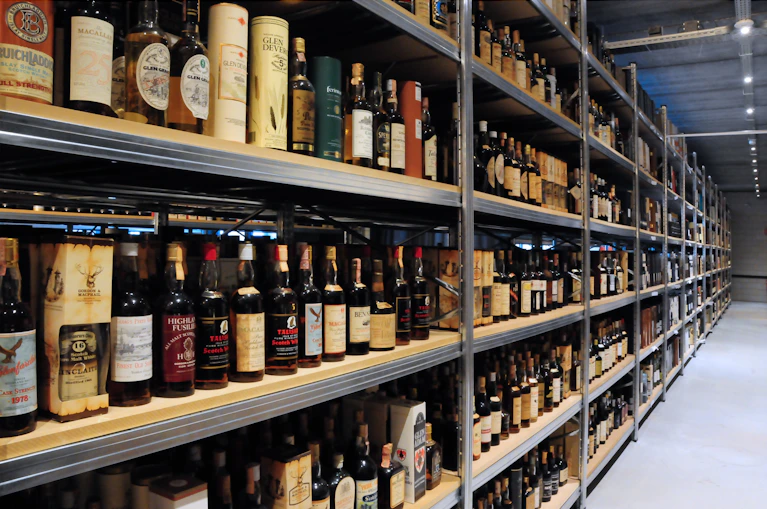
That stock includes two special collections. The Valentino Zagatti Collection comprises over three thousand bottles, including the oldest known Scotch whisky in the world, a hand-labelled bottle from 1843 originally given as a wedding gift. We also hold an extensive St Magdalene collection, from the Lowland distillery that closed permanently in 1983 and enjoys a distinct reputation among collectors.
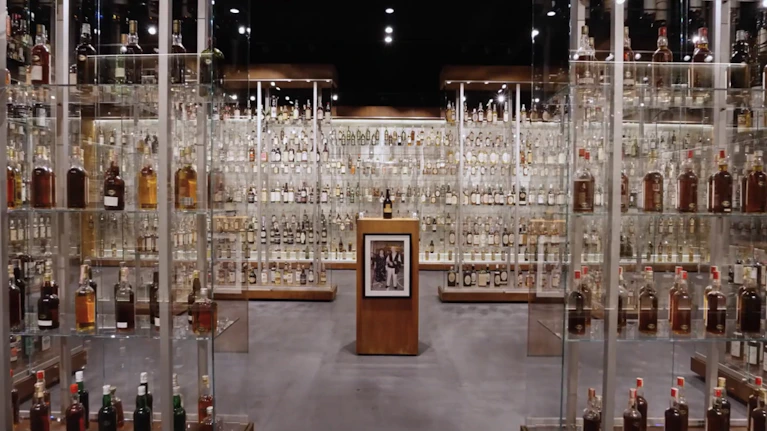
None of these bottlings and vintages will ever be produced again. For Port Ellen and St Magdalene, that holds for the distillery as a whole; for the still-active names, for that particular vintage and bottling. The question of whether Scotland is making too much whisky in 2026 does not touch that stock.
How Scotland's maturing stock is divided by destination, and the role maturation plays, determines where value accumulates. Our whitepaper explains how that shapes the way a portfolio is built. Request the whitepaper.
Storage and provenance
The current surplus is attracting buyers who expect casks now available at sharp prices to appreciate in value over time. In the FT, one industry professional sums up that movement concisely: the smart money is going into bonded storage, the HMRC-approved customs warehouses where Scotch can mature without excise duty falling due until release.
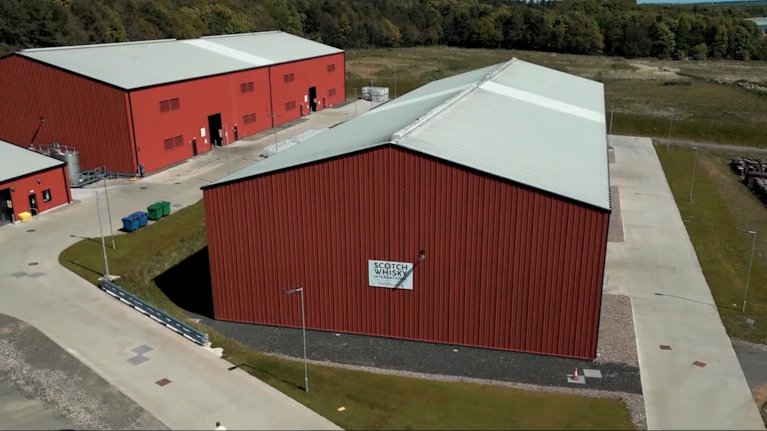
Where a cask is stored and how it is documented determines a significant share of its value at sale. Provenance that cannot be verified weighs heavily on saleability for a thirty- or forty-year-old whisky. For that reason, the group has taken storage into its own hands. Scotch Whisky Warehousing operates its own facility in Scotland, completed in 2024, with four HMRC-registered warehouses, where our investors' casks mature under continuous oversight of provenance, storage conditions and documentation, with the investor as legal owner.
The demand side: the first positive export figures
On the demand side, the first positive signals are becoming visible. Mark Kent, chairman of the Scotch Whisky Association, speaks in the FT of "green shoots". Scotch whisky export volumes rose 6% to 50 million cases in the first half of 2026, with value up 3%. McFadzean notes that growing volumes and falling costs are improving free cash flow for many distillers, and that the worst may be behind us.
The structural tailwind comes from the trade agreements we covered earlier this year. The UK-India agreement halved India's import tariff from 150% to 75%, with a reduction to 40% over ten years, while Scotch currently accounts for just 3% of the Indian whisky market. China cut its tariff from 10% to 5%, and the US's 10% tariff lapsed on 24 July.
There is a counter-argument we do not leave unmentioned. The FT raises the fear that alcohol is in structural decline, comparable to tobacco. The evidence for that is, so far, limited: an IWSR survey of 32,000 respondents across the fifteen largest alcohol markets found that 74% of legal-age Gen Z had drunk alcohol in the past six months, up from 66% three years earlier, against 76% for the adult population as a whole. The volume decline looks more like a spending-power issue than a generational one.
What this means for the whisky investor
August adds three data points to the picture we have described since last year. The market is becoming more selective, with a record share of unsold bottles alongside rising prices for what does sell. Scotch single malt moved above-average and is holding up better than the broader market on a twelve-month basis. And the industry-wide surplus sits almost entirely outside the segment in which the investor in old, documented single malt is active.
That does not make the surplus irrelevant. An industry under financial pressure carries real risks: smaller distilleries and storage operators can run into trouble, and distressed sales can weigh on prices temporarily. That is exactly why provenance, documentation and the reliability of storage weigh heavily.
For the investor with a long horizon, our reading of the cycle is unchanged. This is a phase of base-building, in which positions are built up in a disciplined way. We are not forecasting a rapid rise; we position based on where the cycle stands. What that means for your situation depends on your objective and risk appetite.
Considering a position in Scotch single malt? Our whitepaper covers portfolio structure, the role of provenance and storage, and the risks that come with this asset class. Request the whitepaper.
About Scotch Whisky Investments
Scotch Whisky Investments has specialised in investing in Scotch single malt whisky since 2002. We manage over €350 million in assets and have operated under AFM licence since 2014. More than 1,600 investors build a portfolio of physical bottles and casks through us, retaining legal ownership while we handle the specialist work, from selection and provenance verification to storage in Scotland. Want to know more about what a whisky portfolio could look like for you? Feel free to arrange a no-obligation introductory meeting.
This information is general in nature and does not constitute personal financial advice. Investing carries risks, including value fluctuations and limited liquidity. The index figures cited are broad market averages and say nothing about the value development of an individual bottle or cask. Past performance is no guarantee of future results.
Sources
Whiskystats Price Update August 2026, "Auction prices for Brora surge," 8 September 2026
Financial Times, "Scotland has a whisky problem," Simeon Kerr and Madeleine Speed, 5 September 2026
Commercial Spirits Intelligence (Martin Purvis, Duncan McFadzean), via FT
Scotch Whisky Association, H1 2026 export figures, via FT
IWSR consumer research, via FT
Frequently asked questions
Is there a Scotch whisky surplus?
Yes, but not in every segment. Around 22 million casks are currently maturing in Scotland, up from less than 400 million litres a decade ago to around 1.4 billion litres now. That surplus sits almost entirely at the inflow side: around 88% of that stock is destined for blended whisky and bottled between three and twelve years. In the segment of single malt maturing for twenty-five years or longer, an estimated 0.7% of the total, there is no comparable surplus.
What does the whisky surplus mean for investors in single malt?
The surplus mainly affects the part of the market that sells on volume, distributed through supermarkets and hospitality, with pricing that moves with consumer spending power. Old, matured single malt with verifiable provenance falls outside that stream: that stock actually declines every year through bottlings, consumption and evaporation loss. An industry under financial pressure does carry real risks, however, including the position of smaller distilleries and storage operators.
How many casks of whisky are maturing in Scotland?
Around 22 million casks, equivalent to roughly 12 billion 70cl bottles. The total volume of maturing whisky has grown from less than 400 million litres a decade ago to around 1.4 billion litres in 2026, enough to cover three years of current consumption. Many Scottish distilleries have cut production by more than a third as a result.
Which whisky brand performed best in August 2026?
Brora was the strongest gainer, up 9.3% in the August auctions and 25.8% for 2026. That took second place from Macallan, which gained 1.4%. Port Ellen continues to lead Whiskystats' brand ranking unchanged, with an index level of 287.96 points, a rise of 11.7% this year. These figures are broad brand indices and say nothing about the value development of an individual bottle or cask.
Why did so much whisky go unsold at auction in August 2026?
Of the bottles on offer, 10.6% remained unsold, the highest share Whiskystats has recorded this decade. That does not point to falling prices: what did sell went for prices above the previous month's level in almost every category. The market is buying more selectively, and supply that does not meet demand on name, quality or asking price simply goes unsold.
What is a bonded warehouse, and why does it matter for whisky as an investment?
A bonded warehouse is an HMRC-approved customs facility where Scotch can mature without excise duty falling due until release. For the investor, storage location and documentation also determine a significant share of value at sale: provenance that cannot be verified weighs heavily on saleability for a thirty- or forty-year-old whisky. Scotch Whisky Warehousing operates its own facility in Scotland with four HMRC-registered warehouses, where the investor retains legal ownership of the cask.
Read more
Related articles
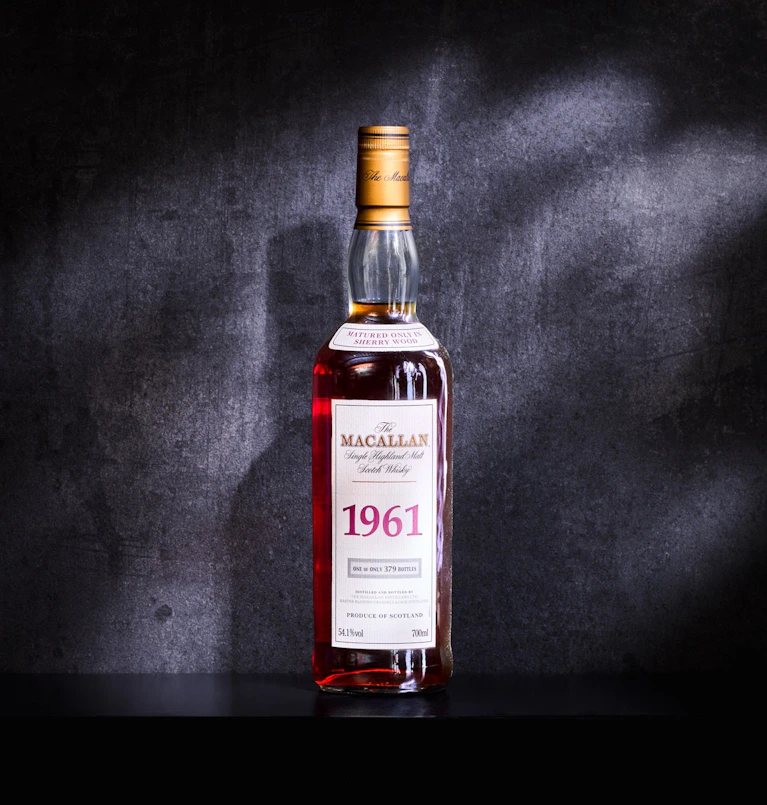
Whisky Monthly Update July 2026: Port Ellen overtakes Macallan
The whisky auction market cooled slightly in July, but the index rose for the third month running. Port Ellen takes the top spot from Macallan and Brora makes a striking jump. The Whiskystats figures for July 2026.
Read article
Whisky Monthly Update June 2026: bottom holds steady for a year
The secondary whisky market closed the first half of 2026 on a quietly positive note. In this update, the key figures for June, and how they fit the picture we outlined earlier this year.
Read article

Whisky half-year update 2026: the market floor takes shape
Since 2002 we have built whisky portfolios for more than 1,600 investors, with over 350 million euros under management. That gives us a direct, inside view of the market. Our conclusion on H1 2026 is clear: after three years of correction, the whisky market appears to have reached its floor. We promise no rapid rise, but in our view the correction phase is behind us.
Read article
Ready to start investing in whisky?
Schedule a no-obligation call with one of our whisky experts.