
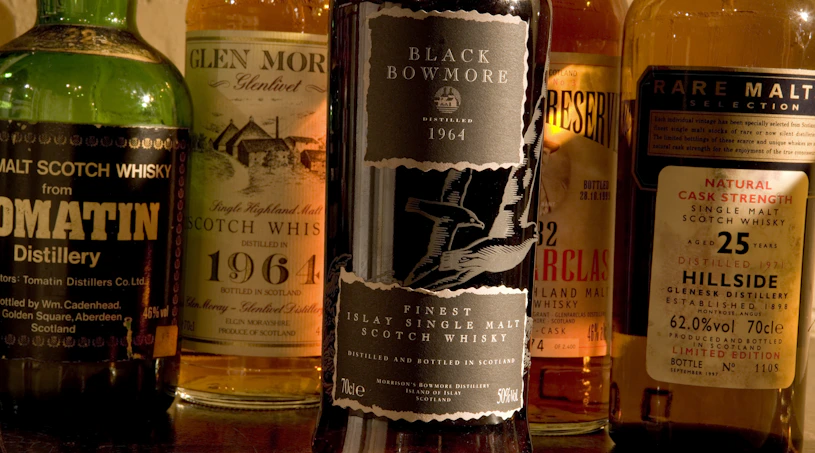
Investing in whisky bottles: rare bottles as a separate asset class
Investing in whisky bottles attracts a growing number of investors looking for diversification in a tangible, internationally tradable object. A bottle of whisky is a finished product: at the moment of bottling its character is fixed. The spirit does not mature any further and will look the same in ten or fifty years, provided it is stored correctly.

Stijn de Smit · 24 June 2026 · 8 min read
- Single malt
- Investing
- Whisky
It is precisely this stability, combined with an active international auction market, that makes rare bottles an asset class with its own dynamics. In this article you will read what determines the value of a bottle, how the secondary market works, which risks apply and how to start responsibly.
What makes a bottle of whisky worth investing in?
Unlike a cask, the value of a bottle does not develop through maturation but through the market. That value can be estimated reasonably well at any moment using auction data and market indices, and bottles are generally easier to trade than casks. Not every bottle is an investment, however: it concerns rare and exclusive Scotch single malt with demonstrable provenance and demand.
For context: single malt makes up roughly 12 percent of all Scotch whisky, and within that only a fraction is truly rare: single malts at least 25 years old at bottling, or scarce historical bottlings. That structural scarcity explains the appeal: once something has been bottled, it cannot be reproduced.
Value drivers: brand, age, scarcity and condition
The value of an investment-grade bottle arises from a combination of factors:
Brand and provenance. Distilleries with a distinct premium reputation, such as Macallan, Springbank, Ardbeg or Brora, consistently achieve higher prices than lesser-known producers.
Age at bottling. The longer a whisky has matured, the rarer it tends to be, and usually the greater the willingness to pay.
Scarcity. Limited editions, single cask bottlings and releases that are never repeated create scarcity. This is reinforced by consumption: every opened bottle disappears permanently from supply, a unique characteristic of whisky.
Condition and completeness. Fill level, an intact seal and original packaging are decisive. A bottle with its box and certificate consistently fetches more at auction than the same bottle without documentation.
Type of bottling. Official bottlings from the distillery and releases from reputable independent bottlers are valued differently by the market.
Scarcity, packaging and demand reinforce one another strongly for some releases. Distilleries now tend to price new releases closer to their expected secondary value, which leaves less upside for new buyers than in the 1990s.
The secondary market and auctions
The primary market, the official release by a distillery or bottler, is often hard to access and sells out quickly. Anyone investing in bottles therefore operates mainly on the secondary market: auctions, specialised platforms such as Whisky Auctioneer or THE SWEX, and private sales through brokers.
Each channel has its trade-offs. Auctions offer price transparency and international reach, but buyer and seller commissions reduce the net return. Private sales through a broker are more discreet and faster, but require market knowledge and a network. Specialist platforms offer a standardised process with a growing buyer base. The international auction market for rare whisky has grown strongly over the past decade.
Featured bottles: value development in practice
To illustrate concretely how the secondary market can value a bottle over the long term, below are two historical examples based on auction data from Whiskystats. See them as two illustrations from a broader group of strongly performing rare bottles: not an isolated anomaly, but also not an average or a forecast.
Over the long term the increase is substantial. The Macallan Folio 1 went from €429 (2015) to €7,824 (2026): well over +1,724% in eleven years. The Black Bowmore 1964/1993 rose from €2,296 (2008) to €17,266 (2026), a gain of more than +652% since 2008. Both bottles saw a clear peak along the way followed by a correction, but even after that pullback the long-term development remains firmly positive.
| Bottle | Entry | Most recent auction | Total increase | CAGR | Highest peak | Since peak |
|---|---|---|---|---|---|---|
| Macallan Folio 1 | €429 (1 Nov 2015) | €7,824 (14 Jun 2026) | +1,724% (×18) | ~31% per year | €21,012 (13 Mar 2022) | −63% |
| Black Bowmore 1964/1993 | €2,296 (12 Nov 2008) | €17,266 (2 May 2026) | +652% (×7.5) | ~12% per year | €26,688 (3 Oct 2018) | −35% |
Source: Whiskystats. Amounts are auction prices before buyer and seller commissions; the net result for an investor is lower.
The correction is an honest part of this picture. Both bottles recorded their highest price years ago and now sit below it: the Macallan about 63% below the March 2022 peak, the Black Bowmore about 35% below the October 2018 peak. Even sought-after bottles can therefore fall sharply in the meantime, and the path upward is never a straight line. It does not change the long-term conclusion (anyone who entered early is looking at a considerable increase despite the pullback), but it makes clear that past results are no guarantee of future returns and that prices can fall sharply too.
Two bottles say little about the market as a whole. The market-wide Whiskystats Scotland Index gives a broader view: starting at 100 in December 2012, with a peak of 352.42 in April 2022 and a level of 198.81 in May 2026. Over the whole period that is still a rise of roughly 99% (around 5.3% per year), with a correction of about 44% from the peak. SWI focuses exclusively on the rare and exclusive segment, which has historically tended to develop differently and better than the broad index. That is not a promise about the future, but it does explain why selection is so decisive.
Storage and authenticity
Because a bottle does not mature any further, storage is about preserving condition. The cork slowly lets oxygen through, which encourages evaporation and oxidation. Good storage therefore means: upright (so the spirit does not attack the cork), out of direct sunlight, at a stable, cool temperature and away from sharp temperature swings.
Authenticity deserves particular attention, because counterfeiting occurs in the higher segment. Always check provenance, documentation and the seal. A bottle with complete provenance and ownership documentation is not only safer, but also more valuable when sold.
Bottle versus cask: the comparison
Many investors combine both forms. Bottles offer a finished end product with immediate market value; casks offer long-term potential through maturation. The table below sets them side by side (see also our article on investing in whisky casks).
Tax rules differ per country and per personal situation. Always consult an independent tax or financial adviser.
Risks and liquidity
Although bottles are relatively liquid, a bottle is not an instrument for short-term speculation; that is risky and requires in-depth market knowledge. The main risks are liquidity (price discovery happens per lot; with limited interest the price can deviate from indicative values), market (demand, brand reputation and macro factors move prices, as the corrections mentioned above show), authenticity and condition, and concentration when diversification is too low. Index levels and guide prices are never guaranteed sale prices, and commissions reduce the net return.
A good exit begins on day one: choose bottles with broad market demand and demonstrable provenance, and plan a phased sale in tranches rather than at a single moment. That limits market-timing risk.
How Scotch Whisky Investments supports investing in bottles
Scotch Whisky Investments selects bottles based on years of market knowledge and a broad network of distilleries, independent bottlers and auction houses. The focus is on rare single malt with the right combination of brand, age, edition size and provenance. Every bottle is checked for authenticity in advance and provided with full ownership and provenance documentation. Legal ownership rests with the investor at all times; SWI acts as custodian.
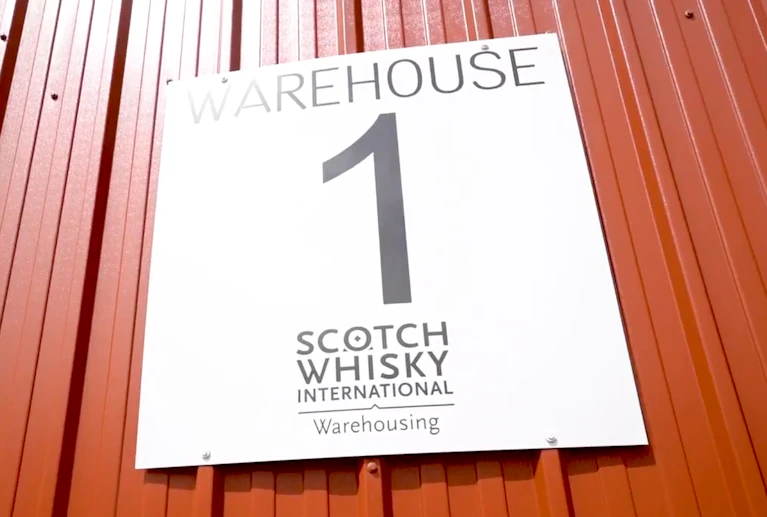
Bottles are kept in a dedicated, secured and conditioned whisky cellar in Sassenheim, holding more than 120,000 bottles, and in the warehouse in Glenrothes, Scotland. SWI operates under the supervision of the Dutch Authority for the Financial Markets (AFM); that says something about the care with which it works, not about the outcome of an investment.
Starting responsibly with investing in bottles
Decide what role whisky should play in your portfolio and choose a suitable horizon of at least five to ten years. Build in diversification across brand, age and type of bottling, and invest only with a limited part of your freely investable assets. Anyone who would rather not follow brands, bottlings and market movements themselves can hand over the selection and sales process entirely.
This information is general and does not constitute personal financial advice. Investing carries risks, including value fluctuations and limited liquidity. Past results are no guarantee of future returns.
Frequently asked questions
Which whiskies are suitable as an investment?
Mainly rare and exclusive Scotch single malts with a strong brand reputation, demonstrable provenance and a limited edition size. Limited editions and single cask bottlings from renowned distilleries are in demand, provided they are in good condition and complete with documentation.
Do rare bottles always rise in value?
No. Examples such as the Macallan Folio 1 and the Black Bowmore 1964 show that rare bottles can rise sharply in value over the years, but this does not happen without interruption: both recorded a peak along the way and now sit below it. The market-wide Whiskystats Scotland Index also fell after the 2022 peak. Rare bottles can therefore certainly fall in value; past results are no guarantee of future returns.
Are bottles more liquid than casks?
Usually yes. A bottle can in principle be offered at any moment via an auction, platform or broker. Even so, it is not a directly liquid asset: the timing of the sale and the commissions partly determine the net result.
How do I store investment whisky correctly?
Upright, out of direct sunlight, at a stable and cool temperature, with an intact seal and original packaging. Good storage protects both the condition and the value of the bottle.
How do I recognise an authentic bottle?
Check provenance, documentation and the seal, and buy from reliable parties. Counterfeiting occurs in the higher segment; complete provenance and ownership documentation is essential.
Where do I sell my bottles?
Via auctions, specialised platforms or private sales through a broker. Each channel differs in reach, speed and cost. A phased sale helps to limit market-timing risk.
Can a bottle fall in value?
Yes. No bottle is a guaranteed investment; prices can rise as well as fall, depending on demand, brand perception and market conditions. Even sought-after bottles such as the Macallan Folio 1 and the Black Bowmore saw a sharp pullback from their peak.
Read more
Related articles
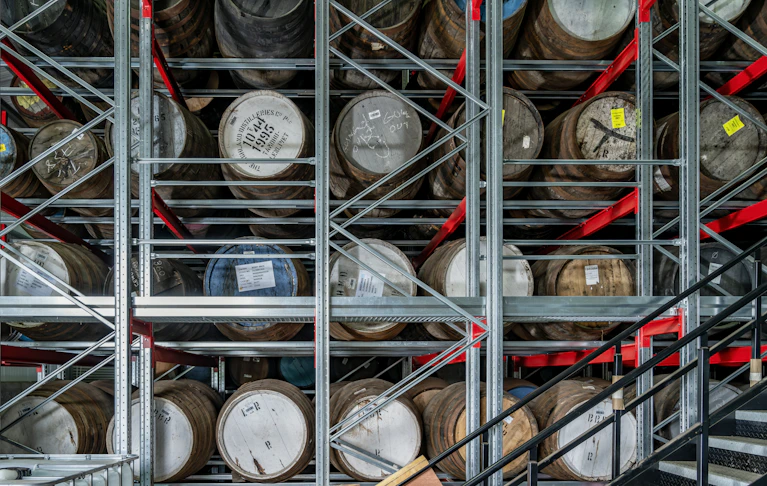
Investing in whisky casks: the cask as a living long-term investment
Investing in whisky casks appeals to a growing group of investors looking for a tangible asset with its own rhythm, detached from the daily movement of stocks and bonds. A cask of whisky is not a passive asset you lock away and forget: from the moment the spirit flows into the oak, a biological process begins that you cannot speed up, namely maturation.
Read article
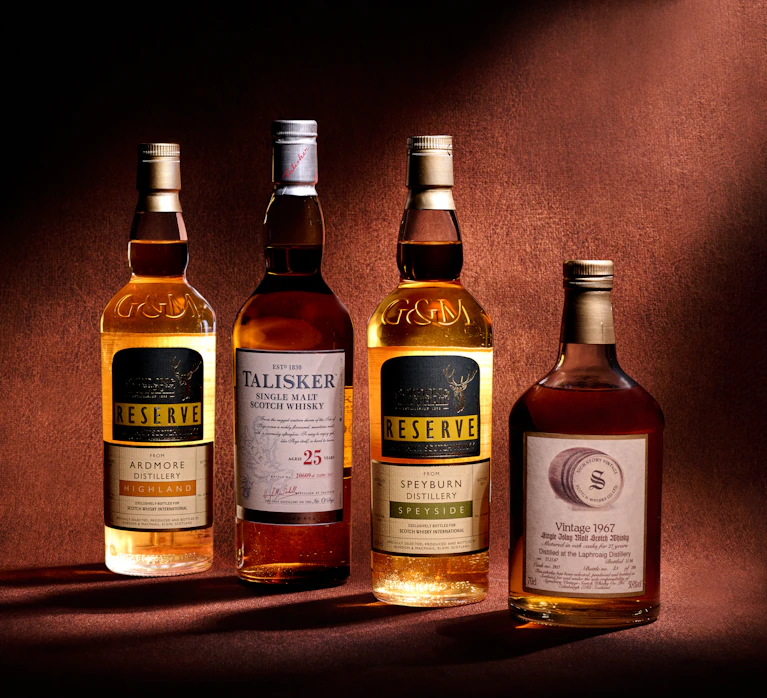
If you are considering investing in whisky, you are in the right place. On this page we explain what investing in rare Scotch single malt whisky involves, why scarcity and maturation are at the core of value development, and what you can expect in terms of return, risk and time horizon.
Read article
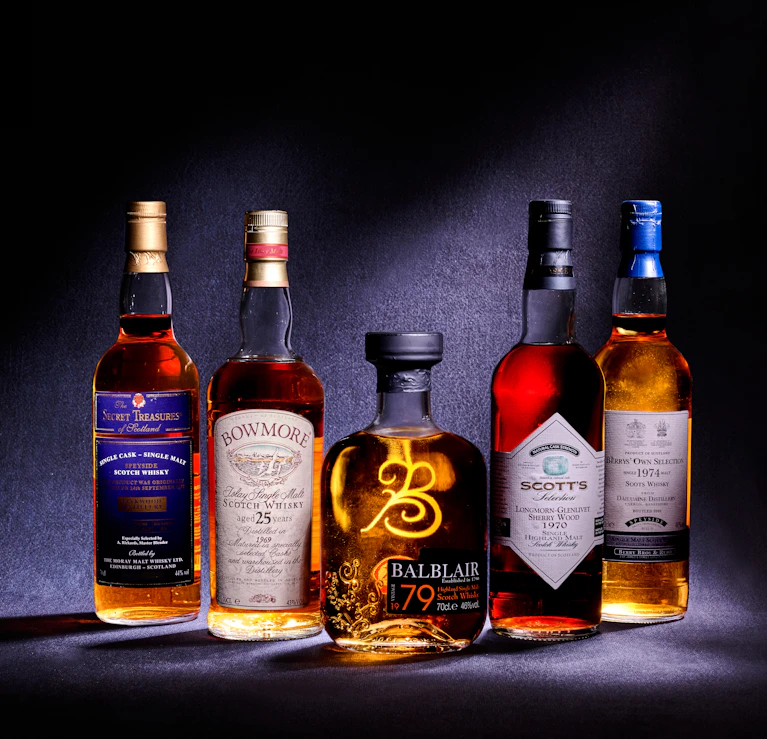
Whisky ETF: does it exist and what are the alternatives?
There is no whisky ETF or index fund that invests directly in physical whisky. Discover how the whisky market works and how you can invest in whisky.
Read article
A Whisky investment you can trust
Considering recent discussions about questionable whisky investment schemes, we’d like to reaffirm what truly sets Scotch Whisky Investments apart.
Read article
Ready to start investing in whisky?
Schedule a no-obligation call with one of our whisky experts.