Governance
A page built for due diligence: our licence from the Dutch Authority for the Financial Markets, what you actually own, how the portfolio is valued, the risks, and where to find the prospectus and the key information document.
Licensed by the Dutch Authority for the Financial Markets
Scotch Whisky International B.V., trading as Scotch Whisky Investments, holds a licence from the Dutch Authority for the Financial Markets (AFM) for investment objects in bottles and casks of whisky.
What the licence does and does not mean
Holding the licence means we met the requirements the Dutch Authority for the Financial Markets sets for offering, advising on and intermediating in investment objects. It does not mean the regulator approves the prospectus in advance, nor that it guarantees returns: Scotch Whisky International B.V. is itself responsible for the accuracy and completeness of that document.
Losses through default by us or by an insurer are not covered by any investor compensation or guarantee scheme.
The Dutch Authority for the Financial Markets
One of Europe’s most demanding financial regulators, and the reason a licence here is worth having.
The Dutch Authority for the Financial Markets, in Dutch the Autoriteit Financiële Markten and generally abbreviated to AFM, is the conduct regulator for the financial markets in the Netherlands. It sets the standards a provider of investment objects must meet before it may offer a product to the public at all: fitness and propriety of the board, adequate capital, sound business operations, controlled risk management and information that is correct, clear and not misleading.
The Netherlands is one of very few jurisdictions that regulate alternative investment objects at all. Most countries leave whisky, wine, art and comparable tangible assets entirely outside the financial rulebook, which is precisely why so few whisky providers anywhere hold a licence of this kind. We applied for ours voluntarily in a market where nobody required it.
The licence was granted on 16 October 2014, making Scotch Whisky International the first and still the only company with a licensed investment product in Scotch single malt whisky.
Limits of the licence
A licence says the requirements were met and that the regulator can act if conduct rules are breached. The AFM does not approve the product or the prospectus, and the licence does not protect you against loss.
No compensation scheme
Investment objects fall outside the deposit guarantee and investor compensation schemes. Losses through default by us or by an insurer are not covered.
Check it yourself
Every licence appears in the public register of financial service providers, including its number, permissions and limitations. Ours is number 12042065.
Title in your name, custody with us
You buy the bottles and casks themselves. We manage, store and insure them under contract.
Legal and economic owner
The purchase agreement names the portfolio, the purchase price, the performance bar and the fee. You are the legal and economic owner of the bottles and casks.
Held for your account
Assets are held for the account of the investor, so in the event of insolvency of Scotch Whisky International they do not in principle form part of the company’s estate.
Insured custody
Bottles sit in the secured vault in Sassenheim or in a bonded warehouse in Scotland; casks mature in bonded warehousing, insured at market value with established insurers.
Quantity guarantee
For whisky still in cask, the invoice states the guaranteed number of 700 ml bottles you are entitled to at bottling. Shortfalls are compensated in kind with comparable whisky.
Quality guarantee
We guarantee the whisky scores at least 85 points on the quality scale used in the industry at bottling, and we co-invest in the same casks.
Lock-up of five years
During the lock-up period bottles stay in our custody and the sale phase cannot start. Casks cannot be physically delivered; after lock-up they can be exchanged for bottles of equal market value.
Risk class 6 of 7
A high-risk investment. You can lose part or all of what you invest, and the investment is only limitedly tradable.
Value risk
Value depends on supply and demand and on sentiment in national and international whisky markets. Valuations are a bandwidth, not a price. Selling before the optimal maturation period usually reduces the proceeds.
Liquidity risk
There is no active regulated market. Finding a buyer can take a long time, longer for larger portfolios, and there is no guarantee of a sale at the last reported market value or within a desired period.
Cask risk
Evaporation is about 3% of the remaining volume per year, the angels’ share. Leakage and imperfect maturation are covered by the quantity and quality guarantees. Alcohol may not legally fall below 40%.
Company risk
If Scotch Whisky International becomes insolvent it can no longer meet its obligations, including the quantity and quality guarantees.
Currency risk
Transactions are largely in GBP and currency exposure is generally not hedged, so movements between GBP and EUR can affect results.
Conflicts of interest
Selection, valuation, group warehousing and performance fee calculation can create conflicts. You have the right to have the portfolio assessed or valued by an independent third party at your own expense.
The risk indicator assumes you hold the product for at least five years. The full risk factors are set out in chapter 4 of the prospectus.
How the portfolio is valued
External price data, a weighted model, and professional judgement where the market is thin.
Bottles
Where both a model or recent auction price and a retail price including VAT are available, the value is set within that bandwidth, with both levels weighted into the outcome. Where no retail price for the bottle or a directly comparable bottle exists, we estimate it from less directly comparable bottles, which typically lands around 25% above the model price depending on market conditions.
Whisky in cask
Valued on look-alike retail prices, including VAT, of recently bottled comparable whisky: the same distillery or one in the same price bracket, and the same age at bottling. A discount is then applied for every year still remaining until the bottling date.
Very exclusive bottles
For very exclusive bottles we depart from the standard methodology and value individually by hand, on a professional assessment of the relevant market and product characteristics.
The difference between a valuation and a sale price
Asking prices are not transaction values and can differ from prices actually realised. For older and very exclusive bottles market data can be limited, which widens the possible deviation. Between the buyer price and the seller proceeds at auction sits the auction house commission.
An interim value is an indication, not a price. Your actual return is only final on sale, and a forced sale should be expected to realise less than the interim value.
What you can request
Prospectus, key information document, annual report and the policies behind the operation.
Prospectus
Version September 2026, filed with the Dutch Authority for the Financial Markets under article 4:19 Wft. Governed by Dutch law, disputes before the court of Noord-Holland in Haarlem.
Key information document
Legally prescribed, dated 15 September 2026, provided digitally before any agreement is signed and available on paper on request.
Annual report
The most recent annual report is available free of charge on request; the annual reports page on our website is password-protected.
Policies
Conflicts of interest policy, incident procedure, risk management practices and ICT and information security procedures.
Complaints
In writing to Industriekade 18A, 2172 HV Sassenheim, or clientsupport@scotchwhiskyinvestments.com. If unresolved, the complaint can be put to KiFiD.
Suitability
Intended for investors with a horizon of at least five years, the capacity to lose a substantial part or all of the amount invested, familiarity with alternative investments and acceptance of limited tradability.
Nothing on this page is investment advice. We recommend investing only with genuinely free investable capital, with a horizon beyond ten years, and with no more than 10% of your free investable capital in whisky.
Continue with about
The group behind the licence, the people who run it, and the story so far.
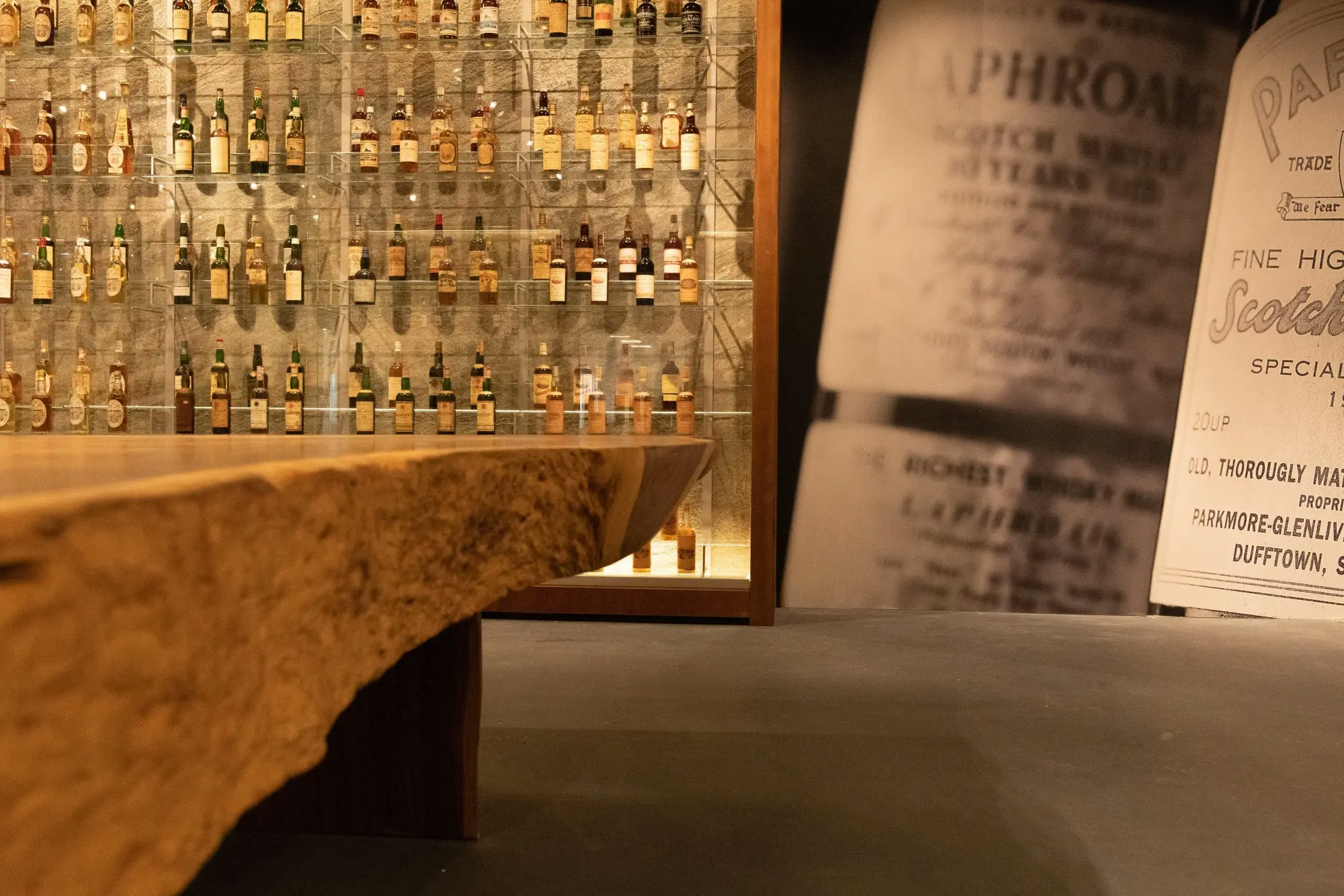
Questions about the licence or the oversight? Discuss them with an adviser.
Speak with Machiel Jimmink about our AFM licence, the oversight and how we protect your assets.