Market picture, October 2026
At the auctions tracked by Whiskystats, more than 32,000 bottles of over 16,000 different whiskies were auctioned in October. That is the highest number since May and 6% more than in October 2025. After the quiet summer months and the pick-up in trading in September, activity increased further.
With that larger supply, prices eased slightly. The Whiskystats Whisky Index, which tracks the 500 most-traded whiskies historically, lost 0.7% over the month. That ends a run of five consecutive monthly rises that began in May.
As we focus exclusively on Scotch single malt whisky, we look specifically at the Scotland index. It stood at 208.60 points at the end of October, against 209.83 points at the end of September. That is a decline of 0.59% over the month, slightly less than the broader market. For 2026 the index is up 2.04%, and year on year it stands 1.12% above the 206.28 points of October 2025. The dip came in a month of ample supply, and a single month says little about the longer-term direction.
This is consistent with the base-building we described in our half-year update and followed further in the September monthly update.
One note on the figures: the Whiskystats indices track only the bottle auction market. Casks are not traded there and so fall outside these figures.
Brora overtakes Port Ellen at the top
Macallan led the Whiskystats brand ranking for most of recent years. In July this year Port Ellen took over first place, as we described in our July monthly update, and in August Brora moved past Macallan into second. In October the Port Ellen index fell 2.8%, while Brora added another 5%. Brora now leads the ranking for the first time.
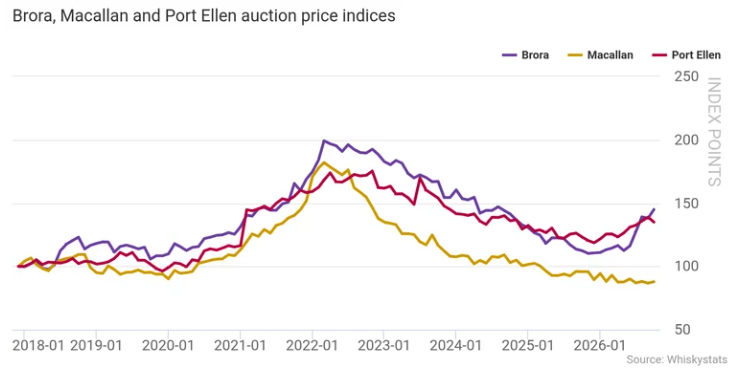
Of all the brands tracked by Whiskystats, Brora has performed best at auction over the past twelve months. The Brora index stands 29% higher than a year ago. Most of that rise came this summer, with gains of 9.6% in July and 9.3% in August, followed by a slight correction in September. Whether Brora can hold that pace through the rest of the peak season cannot be predicted.
Even after October, Port Ellen remains one of the strongest brands of the year. Through September the Port Ellen index was up 17.1% for 2026. After October's 2.8% decline, that is still just under 14% by our calculation. The chart shows the same over the longer term: Brora and Port Ellen stand well above their January 2018 level, Macallan below it.
That rise has an identifiable cause. Brora and Port Ellen both closed in 1983 and reopened only recently, Brora in 2021 and Port Ellen in 2024. The whisky from before the closure is no longer made and diminishes with every bottle opened. Anyone who wants a bottle of pre-1983 Brora or Port Ellen is buying from a supply that only shrinks. Macallan, by contrast, brings a large and continuous supply of new releases to market and is lagging in the ranking. That fits the pattern we have described in recent months: names with a fixed supply of old whisky were the first to recover.
Macallan 1926: the first auction on the estate
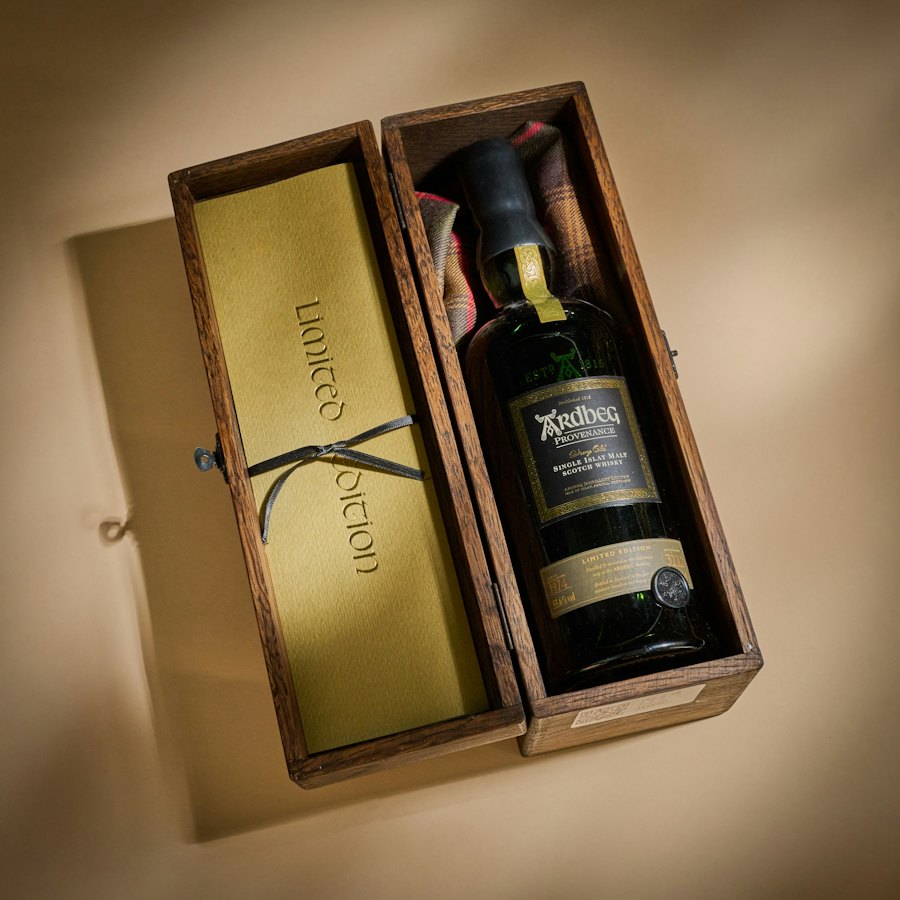
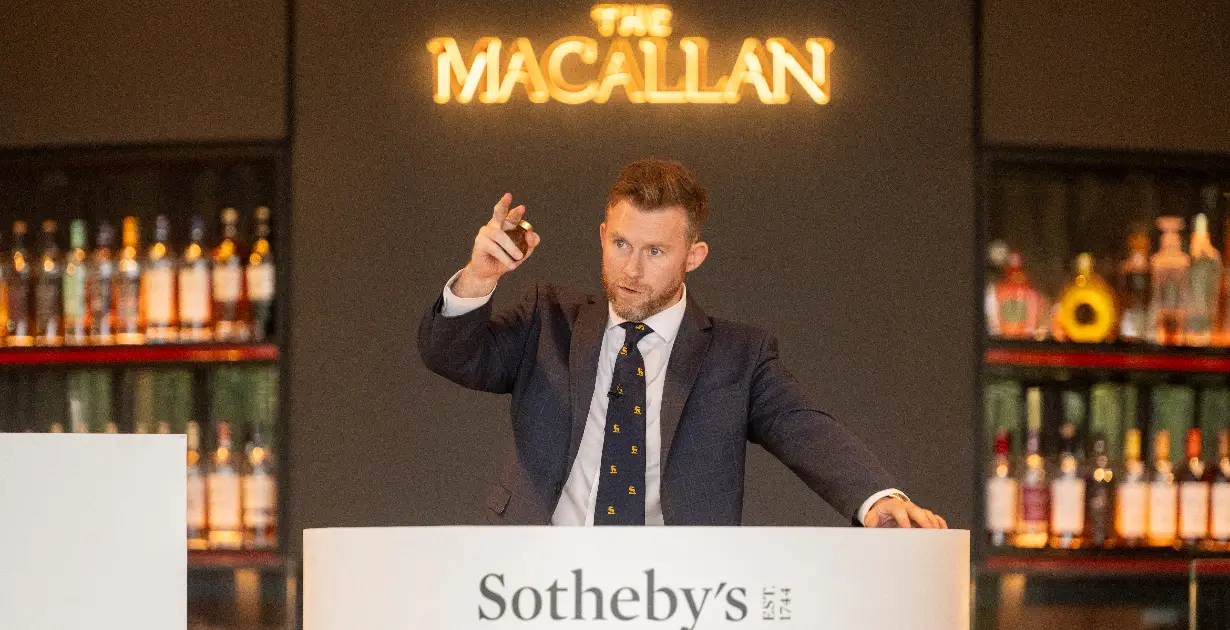
On 9 October, Sotheby's held its first ever auction at The Macallan Estate in Speyside. A bottle of The Macallan Fine & Rare 60 Years Old, distilled on the same estate a century earlier, was hammered down at £1.7 million (estimate £1.7 to 2.2 million). Including the buyer's premium and fees, the buyer paid £2,125,000.
The whisky matured for sixty years in cask 263, a sherry oak cask, and was bottled in 1986. It was the oldest whisky The Macallan had bottled up to then. The cask yielded forty bottles, released under different labels, including Fine & Rare and designs by the artists Peter Blake and Valerio Adami.
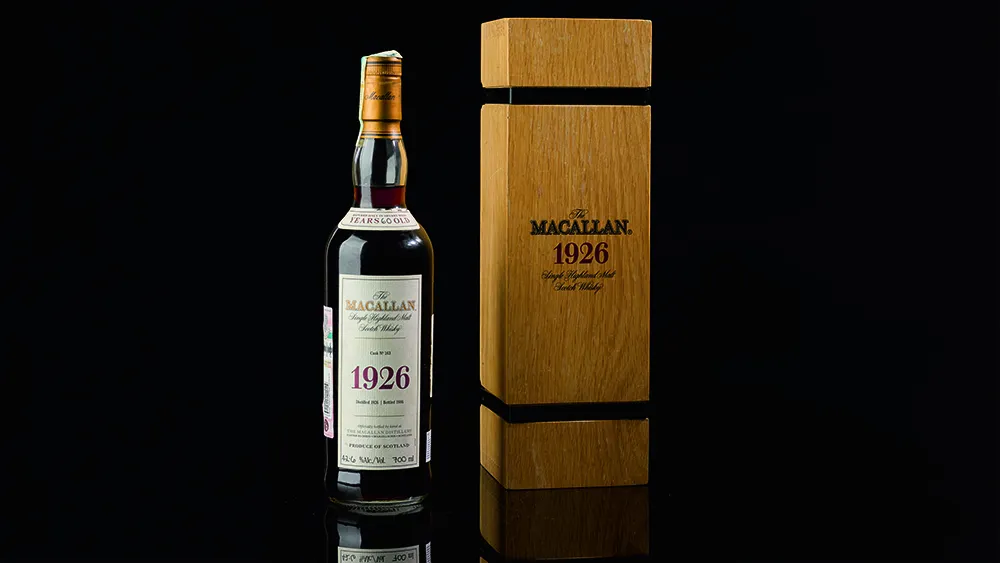
The price of £2,125,000 converts to $2.81 million, the highest price ever paid at auction for a bottle of whisky. The previous record in dollars stood at $2.71 million. It is also the highest price ever for a bottle with the Fine & Rare label; the previous Fine & Rare from this cask fetched £1,452,000 in 2019. In sterling, only a bottle from the same cask has sold for more: a bottle with Valerio Adami's label, which fetched £2,187,500 at Sotheby's London in November 2023. The history of this bottle and the market around it are covered in our article on the Macallan 1926.
The sale shows that there is an international market for the rarest whisky, with buyers who pay millions. Bids came from the room, by phone and online. All 42 lots in the sale were sold, for £3.3 million in total against an estimate of £2.4 to 3.2 million. And that in a year in which the broad whisky market was still coming out of a trough.
The price does stand apart from the Macallan index. That index tracks the most-traded Macallan releases and fell in September, a month before this record sale. A bottle of which there have never been more than forty follows its own pricing. That is why this price says nothing about the value development of an average bottle or cask.
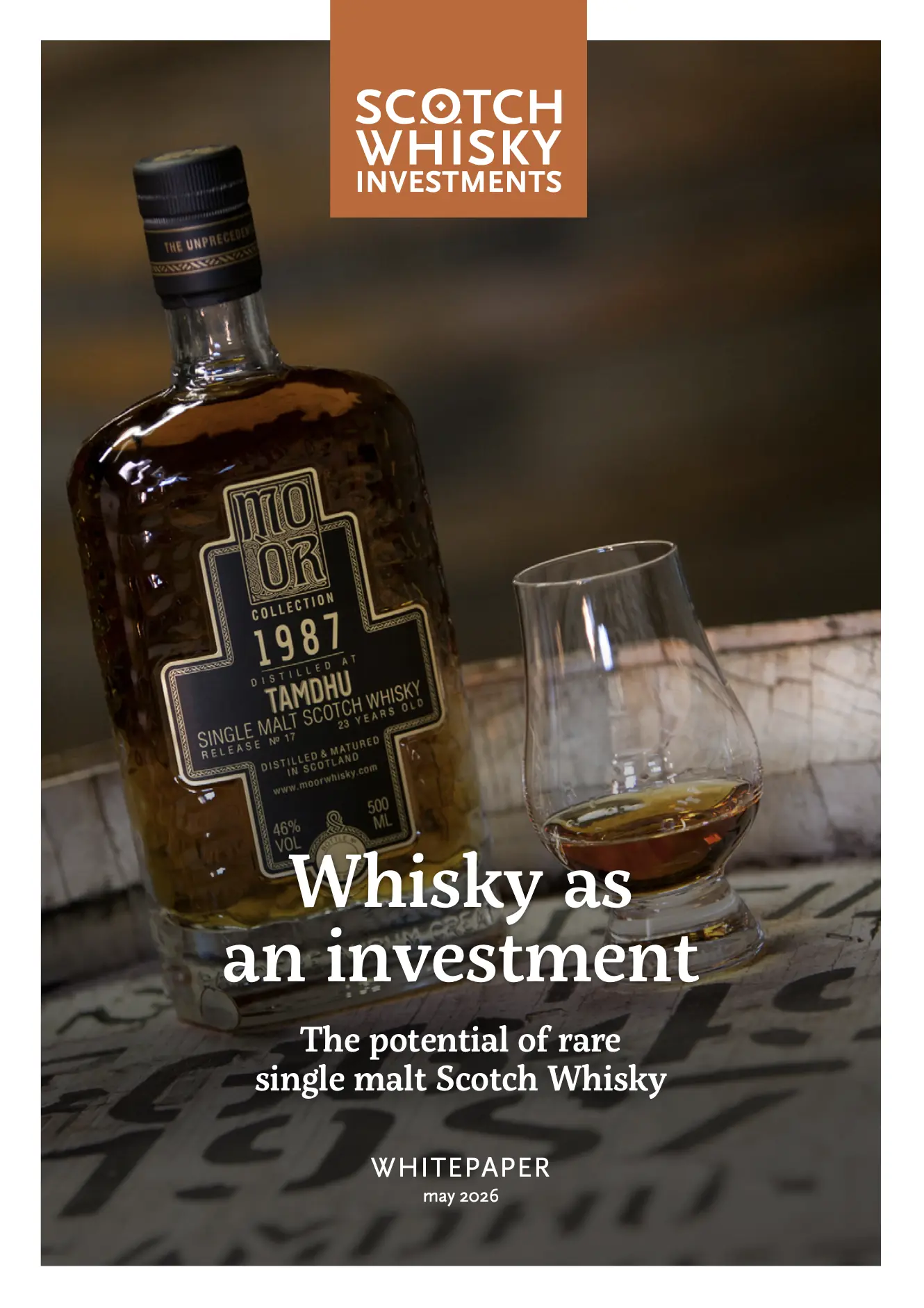
Whisky as an investment
The fundamentals, casks and bottles compared, and how we work, in one document.
39 pages, free, no obligation
Request the whitepaperThis bottle shows what determines value at the top of the market. The whisky matured for sixty years before it was bottled, the number of bottles has been fixed for forty years and can only decrease, and for a bottle of this age and value, documented provenance is decisive for saleability.
How the Scotland index is built
Because we discuss the Scotland index every month, it is worth showing what it consists of. The Whiskystats Scotland index tracks the 500 Scotch whiskies that have historically been traded most at auction. The index is weighted by market value: a bottle that is worth more counts for more. The composition below is as of October 2026.
Weighting of the Whiskystats Scotland index by distillery
500 bottles in the index
Share of bottles against share of the weighting
- The 16 closed or reopened distilleries
- Bottles10.0%Weight24.9%
Weight 2.5 times the share of bottles
- Macallan
- Bottles14.2%Weight34.5%
Weight 2.4 times the share of bottles
The ten heaviest distilleries shown separately, the other 73 distilleries and blends together. As of October 2026.
Source: Whiskystats, Scotland index (index 46)
Show all 84 distilleries
| # | Distillery | Bottles in the index | Weight |
|---|---|---|---|
| 1 | Macallan | 71 | 34.471% |
| 2 | Port Ellenreopened | 13 | 9.7% |
| 3 | Brorareopened | 12 | 8.8% |
| 4 | Ardbeg | 33 | 5.284% |
| 5 | Laphroaig | 30 | 3.501% |
| 6 | Bruichladdich | 35 | 3.272% |
| 7 | Bowmore | 24 | 2.824% |
| 8 | Springbank | 24 | 2.79% |
| 9 | Lagavulin | 12 | 2.769% |
| 10 | Highland Park | 23 | 2.739% |
| 11 | Balvenie | 15 | 1.953% |
| 12 | Rosebankreopened | 6 | 1.7% |
| 13 | Glenmorangie | 23 | 1.566% |
| 14 | Glenfiddich | 18 | 1.431% |
| 15 | Talisker | 8 | 0.97% |
| 16 | Linkwood | 4 | 0.827% |
| 17 | Glenury Royalclosed | 2 | 0.8% |
| 18 | Glendronach | 5 | 0.761% |
| 19 | Millburnclosed | 2 | 0.7% |
| 20 | Royal Lochnagar | 4 | 0.603% |
| 21 | St. Magdaleneclosed | 1 | 0.6% |
| 22 | Convalmoreclosed | 2 | 0.6% |
| 23 | Blend / blended malt | 13 | 0.567% |
| 24 | Glenfarclas | 5 | 0.561% |
| 25 | Clynelish | 3 | 0.512% |
| 26 | Teaninich | 4 | 0.503% |
| 27 | Glen Mhorclosed | 2 | 0.5% |
| 28 | Arran | 8 | 0.486% |
| 29 | Inchgower | 3 | 0.456% |
| 30 | Glen Ord | 3 | 0.426% |
| 31 | Caol Ila | 2 | 0.358% |
| 32 | Cardhu | 2 | 0.339% |
| 33 | Blair Athol | 2 | 0.325% |
| 34 | Dufftown | 4 | 0.313% |
| 35 | Banffclosed | 1 | 0.3% |
| 36 | Glen Albynclosed | 1 | 0.3% |
| 37 | Mannochmore | 2 | 0.292% |
| 38 | Bunnahabhain | 2 | 0.249% |
| 39 | Glendullan | 2 | 0.23% |
| 40 | Bladnoch | 2 | 0.226% |
| 41 | North Portclosed | 1 | 0.2% |
| 42 | Ladyburnclosed | 1 | 0.2% |
| 43 | Mortlach | 2 | 0.197% |
| 44 | Pittyvaichclosed | 2 | 0.197% |
| 45 | Dalmore | 3 | 0.195% |
| 46 | Kilchoman | 7 | 0.187% |
| 47 | Littlemillclosed | 2 | 0.178% |
| 48 | Scapa | 3 | 0.164% |
| 49 | Dailuaine | 2 | 0.146% |
| 50 | Aberfeldy | 2 | 0.145% |
| 51 | Old Pulteney | 2 | 0.12% |
| 52 | Tobermory | 2 | 0.119% |
| 53 | Aberlour | 2 | 0.109% |
| 54 | Glenglassaugh | 1 | 0.1% |
| 55 | Longmorn | 2 | 0.086% |
| 56 | Lochsideclosed | 1 | 0.086% |
| 57 | Glenlivet | 4 | 0.085% |
| 58 | Glengoyne | 1 | 0.071% |
| 59 | Gleneskclosed | 1 | 0.066% |
| 60 | Strathmill | 2 | 0.066% |
| 61 | Kininvie | 2 | 0.066% |
| 62 | Glenlossie | 2 | 0.064% |
| 63 | Balmenach | 1 | 0.061% |
| 64 | Miltonduff | 2 | 0.056% |
| 65 | Craigellachie | 1 | 0.055% |
| 66 | Dalwhinnie | 2 | 0.046% |
| 67 | Macduff | 2 | 0.045% |
| 68 | Glengyle | 1 | 0.042% |
| 69 | Balblair | 1 | 0.039% |
| 70 | Glen Scotia | 1 | 0.032% |
| 71 | Benrinnes | 1 | 0.031% |
| 72 | Oban | 1 | 0.03% |
| 73 | Glen Spey | 1 | 0.026% |
| 74 | Glenturret | 1 | 0.021% |
| 75 | Tamdhu | 1 | 0.02% |
| 76 | Auchroisk | 1 | 0.019% |
| 77 | Tullibardine | 1 | 0.018% |
| 78 | Tamnavulin | 1 | 0.018% |
| 79 | Glenkinchie | 1 | 0.018% |
| 80 | Glen Elgin | 1 | 0.017% |
| 81 | Ardmore | 1 | 0.017% |
| 82 | BenRiach | 1 | 0.017% |
| 83 | Cragganmore | 1 | 0.014% |
| 84 | Jura | 1 | 0.012% |
Three things stand out. Macallan accounts for 71 of the 500 bottles, 14%, but for more than a third of the weight. Together with Port Ellen and Brora, Macallan determines 53% of the index. A move in Macallan therefore carries strongly into the Scotland index as a whole.
Closed distilleries also weigh heavily. Sixteen distilleries in the index are closed or were shut for decades, including Port Ellen, Brora, Rosebank, St. Magdalene and Glenury Royal. They supply 50 of the 500 bottles, 10%, but around a quarter of the weight. That follows from weighting by market value: whisky whose supply no longer grows is worth more per bottle.
Finally, the index describes the broad bottle market, not an individual bottle or casks. The Macallan 1926, for example, is not in it. Casks are not traded at these auctions and fall outside the index.
What this means for the whisky investor
Whisky auction trading in October was large and broadly spread. At the auctions Whiskystats tracks, more than 32,000 bottles of over 16,000 different whiskies changed hands, the highest number since May. At The Macallan Estate a bottle found a buyer at £2,125,000, and all 42 lots in the sale were sold.
In October, ample supply weighed slightly on the broad index. At the scarce end of the market, demand held firm. Brora gained 5% and took the lead, Port Ellen is up almost 14% for the year, and a Macallan 1926 became the most expensive bottle of whisky ever sold at auction in dollar terms. What the three have in common is a supply that is fixed and can only shrink. That is where demand is concentrated, even in a month in which the broad market eased.
That is what we select on: provenance, maturation period and the extent to which supply is limited. A Scotch Whisky Investments portfolio consists, broadly, of twenty percent exclusive, rare bottles and eighty percent maturing casks, selected for the age they must ultimately reach. Our own bottle stock includes releases from the 1960s, 1970s and 1980s and a core of ultra-old bottlings from before 1960. It also holds whisky from closed distilleries, including Port Ellen from before 1983. The provenance of these bottles is documented. The same selection criteria apply to casks, although auction figures are not a direct yardstick there.
For the investor with a long horizon, our reading of the cycle is unchanged. This is a phase of base-building, in which positions are built up in a disciplined way. We are not forecasting a rapid rise. November and December will show whether the broad Whisky Index's gains of May to September hold as supply increases. What that means for your situation depends on your objective and risk appetite.
Considering a position in Scotch single malt? Our whitepaper covers how a portfolio is built, the role of provenance and storage, and the risks that come with this asset class. Request the whitepaper.
About Scotch Whisky Investments
Scotch Whisky Investments has specialised in investing in Scotch single malt whisky since 2002. We manage €327 million in assets and have operated under an AFM licence since 2014. More than 1,600 investors build a portfolio of physical bottles and casks through us, retaining legal ownership while we handle the specialist work, from selection and provenance verification to storage in Scotland. Want to know more about what a whisky portfolio could look like for you? Feel free to arrange a no-obligation introductory meeting.
This information is general in nature and does not constitute personal financial advice. Investing carries risks, including value fluctuations and limited liquidity. The index figures cited are broad market averages and say nothing about the value development of an individual bottle or cask. Past performance is no guarantee of future results.
Sources
Whiskystats, Scotland index (index 46), composition and weight per bottle, October 2026. https://www.whiskystats.com/whisky-auction-price-indices/index/46
Whiskystats Price Update October 2026, "New auction records for Yamazaki," 5 November 2026
Sotheby's, "The Macallan Valerio Adami 60 Year Old: Revisiting the Most Expensive Whisky Ever Sold," 2023. https://www.sothebys.com/en/articles/the-macallan-valerio-adami-60-year-old-revisiting-the-most-expensive-whisky-ever-sold
Frequently asked questions
How did the whisky market perform in October 2026?
The Whiskystats Whisky Index lost 0.7%, after five consecutive monthly rises. More than 32,000 bottles of over 16,000 different whiskies were auctioned, the highest number since May. The Scotland index, which we look at because we focus exclusively on Scotch single malt, eased 0.59% to 208.60 points and is up 2.04% for 2026. These figures are broad market averages and say nothing about the value development of an individual bottle or cask.
Which whisky brand leads the Whiskystats brand ranking?
Since October 2026, Brora. The Brora index rose 5% in October and stands 29% higher than a year earlier, while Port Ellen lost 2.8%. Port Ellen had held first place since July 2026; before that, Macallan led for most of recent years.
How much did the Macallan 1926 sell for in October 2026?
A bottle of The Macallan Fine & Rare 60 Years Old from 1926 fetched £2,125,000 including the buyer's premium and fees at Sotheby's on 9 October 2026. The hammer fell at £1.7 million. The auction took place at The Macallan Estate in Speyside, the first auction on the distillery's grounds. In sterling, the record remains the £2,187,500 paid in 2023 for a bottle from the same cask with Valerio Adami's label. In dollars, this is the highest auction price ever for a bottle of whisky.
Does the price of the Macallan 1926 say anything about the value of other whisky bottles?
No. The Macallan 1926 is an extreme exception, matured for sixty years and one of forty bottles from a single cask. The Macallan index, which tracks the brand's most-traded releases, stayed broadly flat this summer and fell in September. The sale does show what determines value at the top of the market: maturation time, fixed supply and provenance.