
Port Ellen: the ghost of Islay that breathes again after 41 years
For more than forty years Port Ellen stood for one of the most sought-after single malts in the world, while not a drop of new spirit ran from its stills. In March 2024 the legendary Islay distillery returned. A story about scarcity, provenance and time.

Stijn de Smit · 23 July 2026 · 8 min read
- Single malt
- Investing
- Whisky
Some distilleries become famous for what they make. Port Ellen became legendary for what it no longer made. For more than forty years the name stood for one of the most sought-after single malts in the world, while not a drop of new spirit ran from its stills. In March 2024 that changed. Anyone who follows Port Ellen’s history reads, in miniature, the whole story of Scotch whisky: pioneering spirit, overproduction, loss, myth-making and, ultimately, a carefully staged return. For those who approach whisky as a tangible asset, it is an instructive story about how scarcity, provenance and time together shape value, and about the whims of a market that no one can guarantee.
The rise: a pioneer on Islay’s south coast
Port Ellen was founded in 1825 on the south coast of Islay, in the harbour village of the same name, named after Eleanor Campbell, wife of island laird Walter Frederick Campbell. Founder Alexander Kerr Mackay went bankrupt within a few months, after which the distillery passed between family members. It only found direction in 1836, when the then 21-year-old John Ramsay took over the lease.
Ramsay turned Port Ellen into a centre of innovation. He was among the first to see the export opportunities to the United States and in 1848 secured the right to ship whisky in larger casks and store it duty-free before export in bonded warehouses. That system still exists today, as do some of the warehouses he had built, now protected monuments. Port Ellen also played a role in the early history of the spirit safe, the locked copper instrument with which the distiller separates the middle cut of the run and which has stood in every Scottish malt distillery ever since: as early as 1823-1824, even before the distillery was officially founded, one of the first examples was tested on this site. Ramsay also started a regular steamship link between Islay and Glasgow, which helped put the island on the map as a whisky region. The Ramsay family held the distillery until 1920.
After that, things moved quickly. In 1920 Port Ellen passed to blenders Buchanan and Dewar, who in 1925 merged into the powerful Distillers Company Limited (DCL). Under the pressure of American Prohibition and the economic crisis, DCL closed the distillery as early as 1930. Port Ellen fell silent for 37 years, a first “sleep” that is often forgotten, and was only restarted and modernised in 1967, when the number of stills was increased to four. In 1973 the large drum maltings rose opposite the distillery, which supplies malt to the island distilleries to this day.
The fall: silent in the whisky loch
The 1967 revival would last only sixteen years. In the early 1980s the Scottish industry was grappling with the so-called whisky loch: an enormous surplus of whisky, created because production had grown far faster than demand in the 1970s. Blenders, moreover, needed only a small share of heavily peated malt for their recipes. On Islay, DCL owned three distilleries (Caol Ila, Lagavulin and Port Ellen) and was therefore more exposed than most competitors. In the rationalisation, Port Ellen drew the short straw.
In May 1983 the distillery closed, this time for good. The still house and bonded warehouses were demolished, the stills removed and, according to lore, shipped to India in the 1990s. The famed spirit safe went to an excise museum and was later auctioned; no one knows where it is now. Only the maltings kept running, saved by the 1987 Concordat of Islay Distillers, an agreement in which the island distilleries committed to taking part of their malt from Port Ellen to protect employment. In 1992 the distilling licence was withdrawn. Port Ellen seemed to belong forever among the “lost distilleries”.
The legend in slumber: cult, scarcity and auction records
And yet it was precisely in that silence that the myth began. When it closed in 1983, casks still lay in the warehouses. From 2001, owner Diageo released that stock sparingly as an annual edition within the Special Releases. The first, a 22-year-old Port Ellen 1979 at natural cask strength (56.2%), appeared in an edition of around 6,000 bottles. Each year one new Port Ellen followed, distilled in 1978 or 1979, until the series ended in 2017: seventeen separate bottlings, each rarer than the last because the source was finite.
That finite nature made Port Ellen a coveted collector’s item. Every bottle was by definition irreplaceable: nothing more was being added. At auction, prices rose sharply. When Bonhams offered a complete set of the 2001 to 2016 vintages in Edinburgh in 2017, it was estimated to fetch up to £25,000. For enthusiasts and collectors, Port Ellen became synonymous with the rare, peated Islay malt you could only taste from the past. Important to stress: such auction results are snapshots. They illustrate the esteem among collectors, but say nothing about future prices and are no promise of returns.
The return: a phoenix over the bay of Port Ellen
In October 2017, Diageo announced it would bring Port Ellen and its Highland sister Brora, both closed in 1983, back to life. The two projects were part of a broader investment that ultimately came to around £185 million. Repeated delays, partly due to the coronavirus pandemic, pushed the opening back several times, but on 19 March 2024 spirit ran from the stills for the first time in 41 years, in a new, CO2-neutral still house with a biofuel boiler.
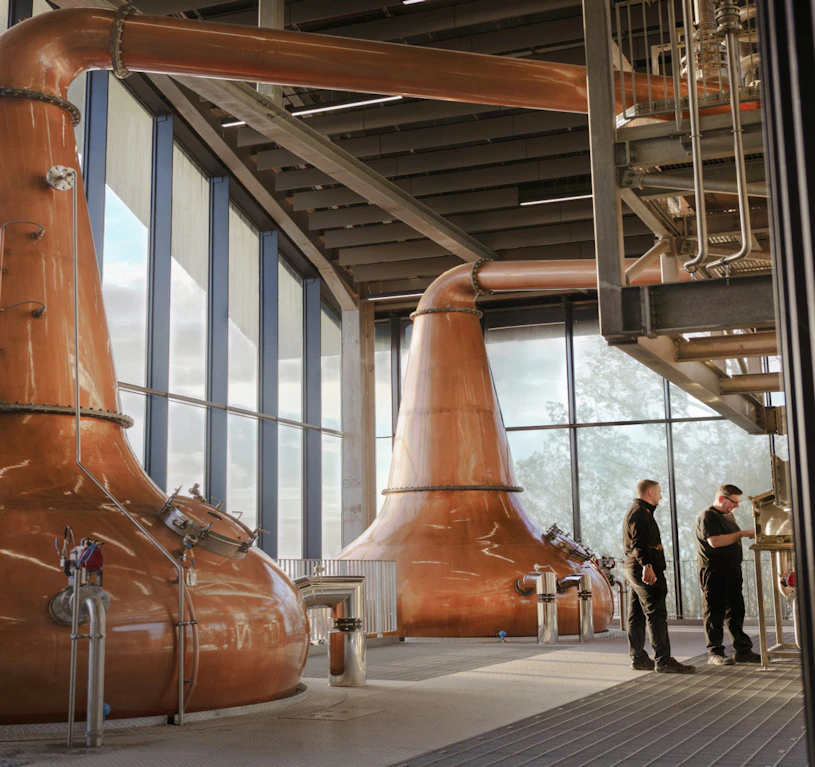
The heart of the new distillery consists of two pairs of copper stills. The first pair, the Phoenix Stills, is an exact replica of the original, vanished stills and is meant to recreate the classic, smoky Port Ellen style. The second pair, the smaller Experimental Stills, has riveted joints that can deliberately be undone, so that the neck or the lyne arm can be swapped to experiment with shape and style. It comes with a unique spirit safe with ten sections, allowing the distiller to divide the heart of the run into far finer fractions, a tool with which the team wants to compile an “atlas of smoke”: a map of the many faces of smoke. Six washbacks of Oregon pine feed both sets of stills, with long fermentations of 98 to 130 hours. Production capacity was confirmed at opening at 1.6 million litres of pure alcohol per year, well over double the initially announced volume of 800,000 litres.
To mark the reopening, Diageo released the Gemini, a set of two bottles of whisky from 1978, at the time the oldest Port Ellen ever released, at 44 years of age. Only 274 sets were made available. That record did not stand for long: in 2025 the Port Ellen Prism was auctioned at Sotheby’s, a 46-year-old single malt from that same year, 1978, which fetched £375,000 at the Distillers One of One charity auction, making it both the oldest and the most expensive Port Ellen ever released.
What the return means
For the whisky lover, the reopening is doubly special. On the one hand, a name returns that for decades existed only in the past. On the other, the new owner makes clear that this is not about nostalgia: the replica stills honour the old style, but the experimental set-up looks ahead. New Port Ellen will have to mature for years before there is anything to taste, and how the market will value the new and the old bottlings alike cannot be predicted.
For those who approach whisky as a tangible asset, Port Ellen offers above all a lesson. Its appeal arose from a rare combination: proven provenance, a finite supply and the significance of time. It is precisely those elements (quality, scarcity, provenance and patience) that determine why some casks and bottles remain sought after. They are no guarantee. But they do explain why a distillery that fell silent on Islay’s south coast continued to capture the imagination for forty years, and why its return has been received with so much attention.
Frequently asked questions
When did Port Ellen close and reopen?
Port Ellen closed for good in May 1983. After more than forty years of silence, spirit ran from the stills again for the first time in 41 years on 19 March 2024, following an investment of around £185 million.
Why is Port Ellen so sought after by collectors?
The supply was finite: between 2001 and 2017 one bottling from the remaining casks was released each year, seventeen in total. Every bottle is therefore irreplaceable, which increased its rarity and collector value. This says nothing about future prices.
What are the Phoenix Stills and Experimental Stills?
The Phoenix Stills are exact replicas of the original stills, meant to recreate the classic smoky Port Ellen style. The Experimental Stills are smaller and adjustable, so the team can experiment with shape and style, supported by a spirit safe with ten sections.
What did the most expensive Port Ellen fetch?
The Port Ellen Prism, a 46-year-old single malt from 1978, fetched £375,000 in 2025 at the Distillers One of One charity auction at Sotheby’s, the most expensive Port Ellen ever released. Auction results are snapshots and are no promise of returns.
Is Port Ellen a good investment?
Port Ellen illustrates the elements that make whisky sought after: proven provenance, scarcity and the role of time. These shape valuation but are no guarantee. Investing in whisky carries risks and past performance is no guarantee of future results.
Read more
Related articles
Investing in whisky casks: the cask as a living long-term investment
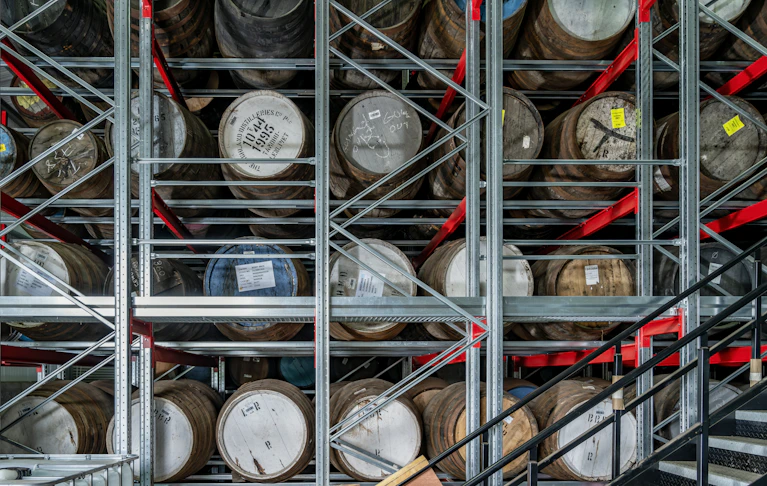
Investing in whisky casks appeals to a growing group of investors looking for a tangible asset with its own rhythm, detached from the daily movement of stocks and bonds. A cask of whisky is not a passive asset you lock away and forget: from the moment the spirit flows into the oak, a biological process begins that you cannot speed up, namely maturation.
Read article
Investing in whisky bottles: rare bottles as a separate asset class
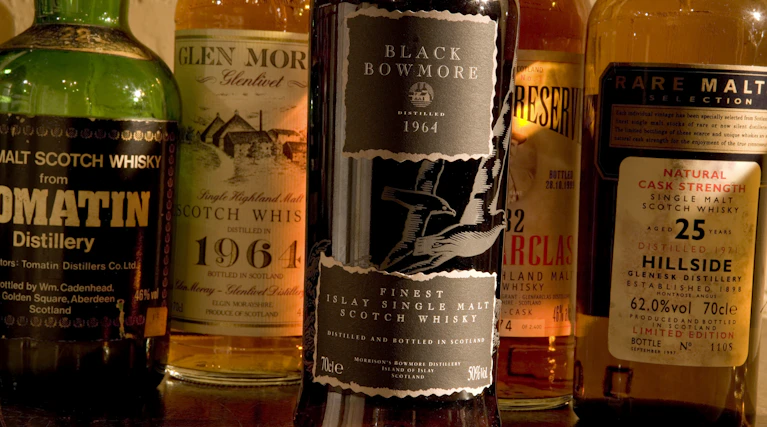
Investing in whisky bottles attracts a growing number of investors looking for diversification in a tangible, internationally tradable object. A bottle of whisky is a finished product: at the moment of bottling its character is fixed. The spirit does not mature any further and will look the same in ten or fifty years, provided it is stored correctly.
Read article
Whisky ETF: does it exist and what are the alternatives?
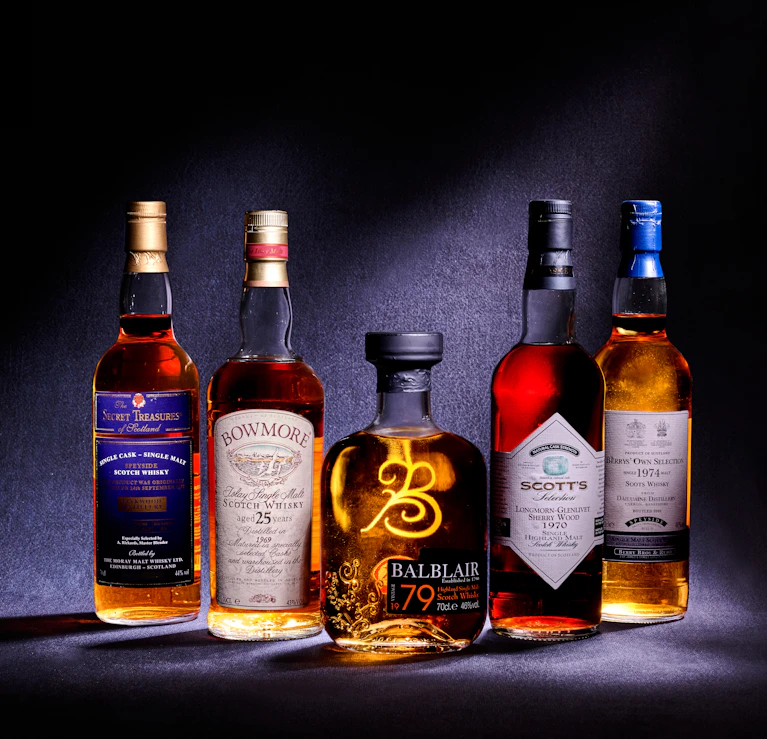
There is no whisky ETF or index fund that invests directly in physical whisky. Discover how the whisky market works and how you can invest in whisky.
Read article
Ready to start investing in whisky?
Schedule a no-obligation call with one of our whisky experts.